
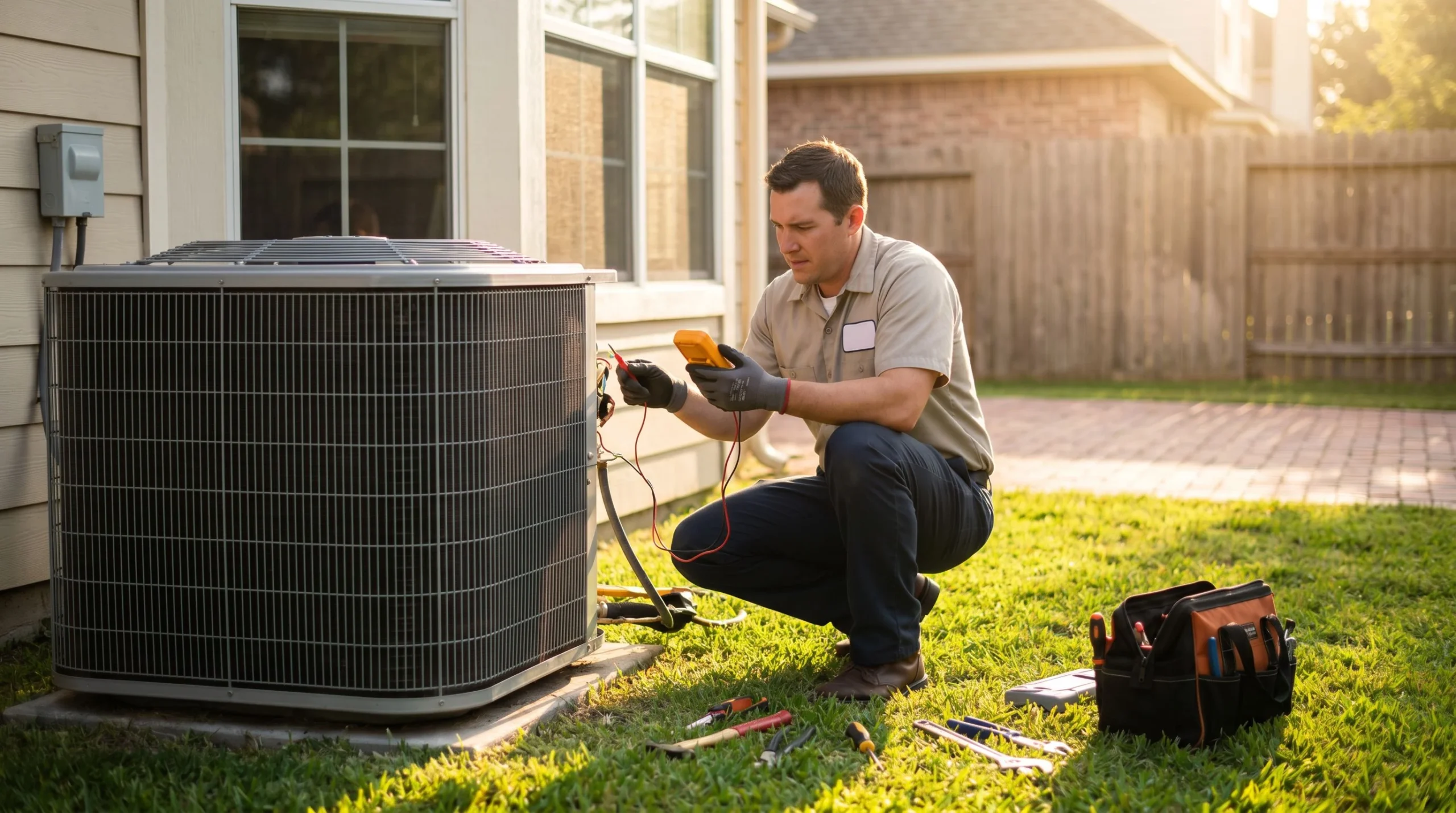
It was 94 degrees the day my AC quit, which is apparently the only kind of day an AC ever quits on. The first company that came out wrote “compressor, recommend full system replacement” on a clipboard and quoted me $7,800 before he’d been in my attic four minutes. The second guy found a $9 capacitor, swapped it in twenty minutes, and charged me $190. Same broken unit. Same week.
That $7,600 gap is the whole reason I’m writing this. The ac repair cost in 2026 runs anywhere from about $100 for a quick part swap to $2,500 for a major component, and the number you get quoted has as much to do with whether the tech thinks you’ll panic in the heat as it does with what’s actually wrong. Summer is peak season for both real breakdowns and real overcharging. So before you say yes to anything, here are the actual prices, the parts that fail most, and how to tell when a “you need a whole new system” quote is fear talking instead of facts.
The short answer: what AC repair costs in 2026
Most homeowners spend $150 to $650 on a typical AC repair. That covers the vast majority of summer calls: a bad capacitor, a worn contactor, a clogged drain line, a failed fan motor. The big, scary numbers, the ones in the thousands, come from compressors and refrigerant problems, and those are the minority of repairs even though they get quoted like they’re the default.
Here’s the range I want stuck in your head before a tech ever rings the doorbell:
| Repair situation | Typical 2026 cost | How common |
|---|---|---|
| Service call / diagnostic only | $75 to $200 | Every visit |
| Capacitor replacement | $120 to $400 | Very common |
| Contactor replacement | $150 to $350 | Common |
| Clogged condensate drain | $100 to $250 | Common |
| Fan motor replacement | $300 to $700 | Common |
| Refrigerant leak repair + recharge | $500 to $1,500 | Occasional |
| Compressor replacement | $1,300 to $2,800 | Rare |
If the first quote you hear is the bottom row and the unit is only a few years old, slow down. That’s the row people get pushed into when a $200 fix would have done it.
What the service call alone costs (and why)
Almost every company charges just to show up. In 2026 that diagnostic fee runs $75 to $200, sometimes more for emergency or after-hours summer calls, when I’ve seen $250 to $350 just for a Saturday visit. That fee pays for the truck, the gas, and the tech’s time to figure out what’s wrong.
Here’s the part nobody tells you: a lot of companies waive that fee if you go ahead with the repair. Ask up front, “Is the diagnostic credited toward the work if I hire you today?” The honest ones say yes. When my second tech came out, his $89 trip charge rolled straight into the $190 total. The first company’s $129 “we’ll see” fee was non-refundable, which should have been my first clue about how the rest of that visit was going to go.
One more thing on timing. Calling at 2pm on the hottest Sunday of July is the most expensive possible moment to need help. If your house is uncomfortable but not dangerous, a Monday-morning call often costs less and gets you a tech who isn’t slammed and rushing.
AC repair cost by the part that broke
Once you know which part failed, the price stops being a mystery. These are the repairs I see come up over and over, with what the part itself usually costs versus what you’ll pay installed. The gap between those two columns is labor, and labor is where the markup hides.
| Part | Part cost | Installed (parts + labor) |
|---|---|---|
| Capacitor | $10 to $40 | $120 to $400 |
| Contactor | $15 to $60 | $150 to $350 |
| Condensate pump | $40 to $120 | $150 to $450 |
| Blower / fan motor | $150 to $450 | $300 to $700 |
| Thermostat (smart) | $100 to $250 | $150 to $400 |
| Evaporator coil | $200 to $700 | $650 to $2,000 |
| Compressor | $500 to $1,500 | $1,300 to $2,800 |
Look at the capacitor line again. A $9 part, and the installed price can hit $400. I’m not saying that’s robbery, a licensed tech with a stocked truck and insurance is worth real money, but it does mean a capacitor quote north of $450 deserves a “what else is included in that?” before you nod.
The capacitor: the most common (and most over-quoted) fix
If your AC’s outside unit hums but the fan won’t spin, or it kicks on then off, the capacitor is the usual suspect. It’s a little cylinder that gives the motors their starting jolt, and they die in heat. This is the single most common summer repair, and it’s also the one most likely to get bundled into a “your system is failing” pitch. A capacitor failing is not your system failing. It’s a $200-ish Tuesday.
Refrigerant: where the real money and the real lies live
If a tech says you’re “low on refrigerant,” the right next question is, “Where’s it leaking?” Refrigerant doesn’t get used up. If it’s low, it’s escaping somewhere, and just topping it off without finding the leak means you’ll be paying for the same recharge next summer. A real leak repair plus recharge runs $500 to $1,500, and the cost of refrigerant itself depends a lot on which type your system uses. Older R-22 systems are brutally expensive to refill now that it’s phased out, which is sometimes a legitimate reason to weigh replacement. Sometimes. Not always.
DIY vs hiring a pro: what you can actually do yourself
I’m all for doing what you can do, but I’ll be straight with you here, more straight than the “you can do anything!” crowd: an AC system holds pressurized refrigerant and high-voltage electricity, and recharging refrigerant without an EPA certification is actually illegal for a reason. So the line for me is clear.
| This is yours to do | This is the pro’s job |
|---|---|
| Replace a dirty air filter ($10 to $30) | Anything involving refrigerant |
| Clear a clogged drain line (wet/dry vac + vinegar) | Replacing a compressor or coil |
| Hose off the outdoor condenser fins (power off) | Electrical component swaps inside the unit |
| Reset a tripped breaker | Diagnosing a system that won’t cool at all |
| Check the thermostat batteries and settings | Anything under warranty (DIY can void it) |
The drain-line clog is the one that saved me a service call once. The AC quit, water was pooling near the indoor unit, and a five-minute wet/dry vac on the outside drain pipe plus a cup of vinegar fixed it. Cost me nothing. So before you panic-call anyone, change the filter and check the drain. About a third of “broken” units I hear about are one of those two things.
For the bigger stuff, hire it out, and keep your system maintained so you call less often. ENERGY STAR’s heating and cooling maintenance checklist is a solid, no-sales-pitch rundown of what regular upkeep actually prevents.
Grab my free project cost estimator before you call anyone. When the house is hot and a stranger is quoting you four figures, it’s hard to think clearly. My one-page estimator has an AC-repair section where you jot the symptom, the quoted part, and the price, so you can see at a glance whether a number is in the fair range or way out of it. Print it, keep it by the thermostat, and walk into every quote knowing what normal looks like.
How to spot a summer overcharge
This is the part Reddit’s home-improvement forums fill up with every July, the “am I getting ripped off?” posts. Here’s my honest gut-check list, built from getting burned once myself.
- “You need a whole new system” within ten minutes. A real replacement recommendation comes after a real diagnosis, not from a glance at your outdoor unit. If they didn’t open anything up, they don’t know yet.
- A capacitor or contactor quoted over $450. Those are sub-$60 parts. A fair installed price tops out around $400. More than that, ask what else is bundled in.
- “Just needs more refrigerant” with no leak search. Refrigerant doesn’t run out. Topping off without finding the leak is selling you the same problem twice.
- Pressure to decide right now. “This price is only good today” is a sales tactic, not an engineering fact. A real emergency is dangerous heat for a vulnerable person, not a salesman’s clock.
- No written, itemized quote. Get the part, the labor, and the diagnostic broken out on paper. Vague totals are where surprise charges breed.
And the simplest defense of all, the one that fixed my own $7,800 scare: get a second quote. It cost me an $89 trip fee and saved me roughly seven grand. If a company is genuinely fair, they’ll never flinch at you getting another opinion. The ones that get offended are telling you something.
When replacing actually beats repairing
Sometimes the “buy new” pitch is honest, and I don’t want you so suspicious that you sink money into a dying unit. Here’s when replacement genuinely makes sense:
- Your unit is 12 to 15+ years old and facing a repair over about $1,500. Old systems hit a point where you’re patching a sinking boat.
- It uses R-22 refrigerant and has a leak. The refrigerant alone can cost more than the repair is worth now that it’s phased out.
- The compressor failed outside of warranty on an older system. A compressor is the most expensive single repair, often $1,300 to $2,800, and on a tired unit it’s frequently the last straw.
- You’re paying for the same repair every summer. Two recharges in two years means the leak’s never been fixed, and the math eventually favors a new system.
A full AC replacement in 2026 typically runs $5,000 to $12,000 installed, so this is a real fork in the road, not a casual upsell. If a repair is under about a third of a replacement and your system isn’t ancient, repair almost always wins. Getting a couple of quotes here matters even more than usual, and it’s the same skill as reading any big home estimate. If you want the full playbook on that, I wrote about how to tell whether your contractor quote is fair.
How to keep your AC repair bill low all summer
The cheapest repair is the one you never need. A few low-effort habits cut my own service calls way down:
- Change the filter every 1 to 3 months. A clogged filter chokes the system and is behind a shocking number of “it stopped cooling” calls. It’s a $15 fix you do yourself.
- Keep the outdoor unit clear. Pull weeds, trim back shrubs, and hose off the fins (power off first). A smothered condenser works itself to an early grave.
- Book a tune-up in spring, before the rush. A $100 to $200 maintenance visit in April catches the weak capacitor before it dies on you in 95-degree July, when the same call costs triple.
- Don’t crank it from 80 to 65 the second you walk in. Steady settings stress the system far less than big swings.
If you’re tracking the bigger picture of what home upkeep runs you each year, I keep a running breakdown in my post on real home improvement cost statistics, AC included.
Frequently Asked Questions
How much does an AC repair cost on average in 2026?
Most AC repairs run $150 to $650, with the average homeowner spending around $350 to $400. Common fixes like a capacitor or contactor land on the lower end, while refrigerant leaks and compressor work run into the thousands. The diagnostic service call alone is usually $75 to $200, and many companies credit it toward the repair if you hire them.
Why is my AC repair quote so much higher than another company’s?
The biggest swings come from whether the tech is selling you a part versus a whole new system, after-hours and peak-summer pricing, and how much labor markup they build in. A capacitor is a sub-$60 part, so an installed price over $450 deserves questions. Getting a second quote for the same written diagnosis is the fastest way to see who’s fair, and it’s saved me thousands.
Is it cheaper to repair or replace an AC unit?
Repair almost always wins if your unit is under about 10 years old and the fix costs less than a third of replacement. A new system runs $5,000 to $12,000 installed, while most repairs are a few hundred dollars. Replacement makes sense once a unit is 12 to 15+ years old, uses phased-out R-22 refrigerant, or needs a compressor that costs more than the tired system is worth.
Can I do any AC repairs myself to save money?
Yes, the safe DIY jobs are changing the air filter, clearing a clogged drain line with a wet/dry vac and vinegar, hosing off the outdoor condenser with the power off, resetting a tripped breaker, and checking the thermostat. Leave anything involving refrigerant or electrical components to a pro, recharging refrigerant without an EPA certification is illegal and dangerous. About a third of “broken” units are just a dirty filter or a clogged drain.
An AC repair is rarely the only thing on a homeowner’s list. If you’re sizing up bigger projects too, I broke down every room and price range in my full home renovation cost guide so you can build one honest number.
Prices in this guide are 2026 estimates and vary a lot by region, the age and size of your system, and how busy the season is. Treat them as a starting point for comparing your own quotes, not exact figures.
A heat pump shares most of these parts with a central air unit, plus a few winter-only failures, all covered in the cost to repair a heat pump.
A mini split that smells musty or drips down the wall usually needs cleaning before it needs a repair. Before you book a service call, run through the DIY steps for keeping a ductless unit clean.
2026 AC Repair Cost Estimates by Problem
“How much to fix my AC” depends entirely on what broke. Here are rough 2026 US ranges by the most common repairs, so when a tech quotes you, you know whether it smells fair or like a sales pitch for a whole new system.
| Repair | Typical 2026 range | How serious it usually is |
|---|---|---|
| Capacitor replacement | $130–$400 | Common, quick, often the real fix |
| Contactor replacement | $150–$400 | Minor electrical part |
| Refrigerant recharge | $200–$700+ | Often a symptom — means a leak somewhere |
| Fan motor replacement | $300–$700 | Moderate |
| Evaporator/condenser coil | $600–$2,500 | Major — weigh against replacing the unit |
| Compressor replacement | $1,200–$2,800+ | Often the “just replace it” line |
What blows the AC repair bill
- Letting them upsell a whole system off a cheap fix. A $200 capacitor problem sometimes gets pitched as a $7,000 replacement. Get a second opinion before you approve anything over a grand.
- Recharging refrigerant without finding the leak. Refrigerant doesn’t get “used up.” If it’s low, it leaked, and a recharge alone just buys you a few months before you pay again.
- Skipping maintenance. A clogged filter or filthy coil makes the system overwork until an expensive part fails. A $20 filter and a yearly tune-up prevent most of the scary line items above.
Free DIY Project Cost Estimator
The spreadsheet I use to price out a project before I start, so a weekend job never blows the budget. Join the newsletter and I’ll send it over.
No spam, ever. Unsubscribe anytime. — Tessa
Keep reading — more on HVAC & Hiring a Contractor

Furnace Replacement Cost in 2026: My Three Quotes and the Signs It Was Time
Last April the furnace in our basement started to howl. The little motor that pulls exhaust…
Read article →
Chimney Inspection Cost: What I Paid Before Lighting the First Fire
The first cold night in my fixer-upper, I had a stack of firewood on the porch,…
Read article →
Heat Pump Maintenance: What It Costs and Why It Beats the Repair
The tech pulled the top grille off my outdoor unit, tipped it toward me, and let…
Read article →
Interior House Painting Service: How to Hire One Without Getting Burned
The first interior house painting service to quote this house described the entire job in five…
Read article →