
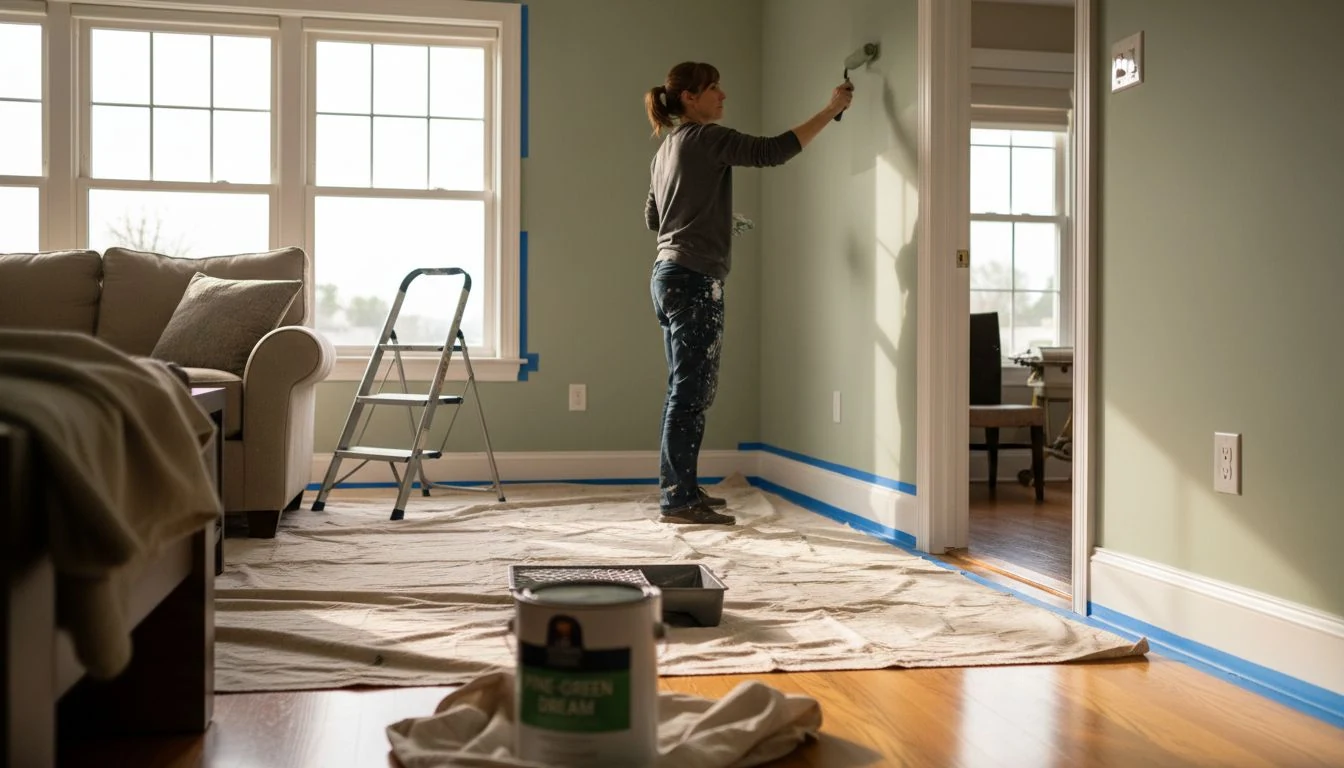
A painter walked my house last spring, nodded at every room, and handed me a number on the back of a business card: $7,400. Three bedrooms, a living room, a hallway. No ceilings, he added, like that was a favor. I stood in my own kitchen doing the math on my phone while he waited, and I could not for the life of me figure out how a few gallons of paint and a long weekend turned into the price of a used car.
Here is the honest version before the tables. The interior painting cost in 2026 runs about $2 to $6 per square foot of floor space, or roughly $1.50 to $4 per square foot of actual wall, materials and labor together. Most single rooms land between $350 and $1,200, and painting the whole interior of an average home usually costs $2,500 to $6,500. Paint itself is the small part. What you are really buying is prep, patching, taping, two coats, and the hours it takes to make the edges clean. Below I break the interior painting cost down per square foot, by room, and by the line items that quietly never make it onto a lowball quote, so you can build your own number before anyone hands you a business card.
What does interior painting cost in 2026?
As of mid-2026, the national average to paint a room professionally lands around $350 to $1,200, and a whole-house interior runs $2 to $6 per square foot of floor area. That is the all-in number: the paint, the primer, the tape and plastic, the patching, and the labor that eats most of the bill. The thing most people miss is that the paint itself is usually under 15 percent of what you pay. The rest is the slow, careful, do-it-twice work a cheap quote loves to skip.
The fastest way to sanity-check any painting number is by quality tier.
| Job level | What you get | 2026 cost per sq ft of floor |
|---|---|---|
| Budget | Walls only, light prep, one coat over a similar color, basic paint | $1.50 to $3 |
| Mid-range (most jobs) | Walls plus minor patching, two coats, trim, mid-grade paint | $3 to $4.50 |
| Premium | Walls, ceilings, trim and doors, real prep, color change, top-tier paint | $4.50 to $7+ |
My $7,400 quote was a mid-range job priced like a premium one, and it left the ceilings out. Two other companies came in at $4,200 and $4,900 for the same rooms. The expensive guy was not lying about anything. He was betting I would not get a third quote, which is the most expensive assumption you can let a contractor make about you.
Interior painting cost per square foot
Per square foot is the only honest way to compare painting quotes, because a tight 10-by-10 bedroom and an open great room are not the same job even with the same paint. There are two ways painters measure it, and confusing them is how you end up arguing about a bill. Cost per square foot of floor area runs $2 to $6. Cost per square foot of wall area runs $1.50 to $4. Walls always add up to more than the floor, so always ask which one a quote is using.
Split that price into its two real halves and you can check anyone’s math. Paint and materials run about $0.50 to $1 per square foot. Labor runs $1.50 to $4 per square foot, and it is the bigger half by far. Painting labor is high because it is tape-the-trim, patch-the-dings, cut-the-edges, wait-for-it-to-dry, do-the-second-coat work, and there is no shortcut that does not show on the wall in raking afternoon light. When a quote comes in way under $1.50 a foot, someone is planning one thin coat and skipping the prep. When it sails past $5, ask what the ceilings, the trim, or the color change is adding, because something specific is driving it.
One thing I wish I had known sooner: a dramatic color change costs more than you would guess. Going from a dark accent wall to white can take three coats and a coat of primer, and every extra coat is more paint and more hours. I picked a deep navy for one wall on a whim, loved it for a year, then paid to bury it under two coats of primer and two of white when we sold. Live with bold colors knowing future-you might pay to undo them.
Interior painting cost by room
Once you know your per-foot price, the total is mostly room math. The trap is picturing “a room” as one flat number, when ceilings, trim, and how many coats it needs swing the price hundreds of dollars. Here is what a mid-grade professional job (walls, light patching, two coats) costs by room in 2026.
| Room | Typical size | 2026 cost to paint (pro) |
|---|---|---|
| Bathroom or small bedroom | Up to 120 sq ft | $200 to $500 |
| Average bedroom | 130 to 180 sq ft | $350 to $800 |
| Living room or great room | 300 to 400 sq ft | $600 to $2,000 |
| Kitchen (walls only) | Cabinets take the space | $300 to $800 |
| Hallway and stairwell | Tall, awkward walls | $400 to $1,000 |
| Whole interior (2,000 sq ft home) | Walls, some trim | $4,000 to $11,000 |
Stairwells and two-story foyers cost the most per square foot of anywhere in the house, because you are paying for ladders, scaffolding, and the risk of working over a stairwell. If you only have the budget for some rooms this year, do the high-traffic ones first. A kitchen and living room read as a whole refresh, the same way a small budget patio makeover changes the whole backyard. If you are weighing paint against bigger jobs, it helps to see it against the full home renovation costs picture before you commit the season’s money.
DIY vs. hiring a painter: the real math
This is the question that decides your whole budget, and I have landed on both sides of it. Painting a single bedroom yourself is one of the best-value DIY jobs in the house. You will spend $80 to $250 on paint, a roller kit, tape, and a drop cloth, versus $350 to $800 to hire it out, and the skill ceiling for a flat wall is low. A weekend and a podcast and you are done.
Where I stop doing it myself: ceilings, whole-house jobs, and anything with a lot of trim or a color change. Ceilings are miserable and easy to streak. A whole interior is two solid weeks of your nights and weekends, and pros do it in three days with sprayers and a crew. Trim and doors are slow, fussy, and the place sloppy work shows the most. I painted my own living room and bedrooms and gladly paid someone for the stairwell and the trim, because the ladder work scared me and the cut lines were beyond my patience. Be honest about which kind of job you have before you buy ten gallons you will resent by Sunday.
Grab my free Project Cost Estimator
I put every line on this page, with its 2026 price range and a DIY-or-pay-for-it tag, onto one printable sheet. Print it, fill in your rooms, square footage, and whether you are changing colors, and you will have a real painting number before you call a single painter. No fluff, no upsell.
The hidden costs that aren’t on the painting quote
This is where my “simple” painting quotes quietly differed by thousands. None of it is shady on its own. It only becomes a problem when a painter leaves it off to win the bid and bills it later as a change order. Read every quote looking for these:
- Drywall repair and patching: $75 to $400+ depending on the damage. Nail pops, cracks, and old anchor holes all need filling and sanding before a drop of paint goes on.
- Primer: often a separate line, especially for a color change, new drywall, or covering stains. A real coat of primer can add $0.50 a square foot.
- Ceilings and trim: almost always quoted separately from walls. “I’ll paint the bedroom” can mean walls only unless you spell out ceilings, trim, doors, and closets.
- Number of coats: one coat versus two is a different price. A dark-to-light color change can need three. Confirm how many coats the number includes.
- Lead paint testing: if your home was built before 1978, federal rules require lead-safe work practices, which adds containment and cleanup cost.
- Furniture moving and protection: some crews move and cover everything, some expect an empty room. Ask, or you will be hauling a couch at 7 a.m.
The fix is simple. Before you compare prices, make every painter quote the same scope in writing, including coats, primer, ceilings, trim, and patching. The cheapest bid that “forgot” the ceilings and the second coat is not cheaper. It is quoting a different, smaller job. That same instinct runs through my whole checklist on whether a contractor quote is fair.
Where you can save on interior painting (and where you shouldn’t)
You can shave real money off a paint job without ending up with a worse wall. Smart places to save: paint the rooms yourself where the walls are flat and the prep is light, buy mid-grade paint instead of the top designer line (the difference on a bedroom wall is small), do your own patching and taping before the crew arrives, and bundle several rooms into one visit so you are not paying a setup fee twice. Painting over a similar color skips a coat and saves real money, too.
Where you should not cheap out: prep and paint quality on high-traffic and wet rooms. A skipped patch shows through forever, and bargain flat paint in a kitchen or bathroom will not survive a sponge. If your house predates 1978, do not let anyone sand or scrape without lead-safe practices, which you can read about straight from the U.S. EPA Renovation, Repair and Painting program. And if you are hiring out, vet the painter the way you would any contractor, because deposits-and-disappear is a real move the U.S. Federal Trade Commission warns homeowners about. The cheapest quote that skips prep is the one you repaint in two years.
| Room | DIY cost (paint + supplies) | Pro cost (mid-grade) | Honest verdict |
|---|---|---|---|
| Single bedroom | $80–$250 | $350–$800 | DIY — easy, high savings |
| Living room (no high walls) | $120–$300 | $600–$2,000 | DIY if you have the weekend |
| Trim and doors | $60–$200 | $1–$3 per linear ft | Toss-up — slow but doable |
| Ceilings | $50–$200 | $1–$2.50 per sq ft | Hire it — messy, easy to streak |
| Stairwell / 2-story foyer | Ladder risk | $400–$1,000+ | Hire it — safety first |
What blows the painting budget
- Underestimating the prep. People price the paint and forget the patching, sanding, and priming, which is where most of the labor hours and most of the surprise cost actually live.
- Forgetting ceilings and trim. A “paint the bedroom” quote often means walls only, so the ceilings, trim, doors, and closets show up later as a change order that doubles the room price.
- Picking a dramatic color change. Going dark-to-light or covering a bold accent can need primer plus three coats, turning a one-day room into a two-day one and adding paint and hours you never budgeted.
Painting a room with brand new walls? Prime first, and if the board is not up yet, read how much it costs to hang and finish drywall.
FAQ
How much does interior painting cost in 2026?
The interior painting cost in 2026 runs about $2 to $6 per square foot of floor area, or $1.50 to $4 per square foot of wall, materials and labor together. Most single rooms land between $350 and $1,200, and painting the whole interior of an average home usually costs $2,500 to $6,500. Paint is the small part; prep and labor are most of the bill.
How much does it cost to paint one room?
A pro typically charges $350 to $800 to paint an average bedroom, $200 to $500 for a small room or bathroom, and $600 to $2,000 for a living room or great room, depending on ceiling height, trim, and how many coats it needs. Doing a flat-walled bedroom yourself costs $80 to $250 in paint and supplies.
Is it cheaper to paint yourself or hire a painter?
For a single flat-walled room, DIY is far cheaper: $80 to $250 in materials versus $350 to $800 to hire it out, and the skill ceiling is low. Hiring wins for ceilings, whole-house jobs, lots of trim, and stairwells, where pros are faster, safer, and cleaner. The honest split is DIY the easy walls and pay for the ladder work.
Why is painting labor so expensive?
Labor usually makes up over 80 percent of a paint job because the paint is cheap but the work is slow. You are paying for patching, sanding, taping, priming, cutting clean edges, and a second coat with dry time in between. Labor runs about $1.50 to $4 per square foot, and there is no shortcut that does not show on the wall later.
What hidden costs should I watch for in a painting quote?
The big ones are drywall patching ($75 to $400+), primer as a separate line, ceilings and trim quoted apart from walls, the number of coats, lead-safe practices for pre-1978 homes, and furniture moving. Make every painter quote the same scope in writing so a low bid is not just leaving out the second coat and the ceilings.
Prices in this guide are 2026 national estimates and vary a lot by region, paint grade, room size, ceiling height, and how much prep your walls need. Always get itemized written quotes before you budget. I share what I have learned from my own projects, not professional construction or legal advice.
Free DIY Project Cost Estimator
The spreadsheet I use to price out a project before I start, so a weekend job never blows the budget. Join the newsletter and I’ll send it over.
No spam, ever. Unsubscribe anytime. — Tessa
Keep reading — more on Painting & Finishing Costs
How Much Does Exterior House Painting Cost in 2026? (By Siding + DIY vs. Pro)
Last June I paid a crew $4,800 to paint the front and both sides of my…
Read article →
How Much Does Drywall Repair Cost in 2026? (By Damage Type + DIY vs. Hire)
The first hole I ever patched was a doorknob-sized crater my dog put in the hallway…
Read article →
How Much Does It Cost to Paint Kitchen Cabinets in 2026?
The real cost to paint kitchen cabinets in 2026: DIY vs pro tables, per-door pricing, kitchen-size…
Read article →