
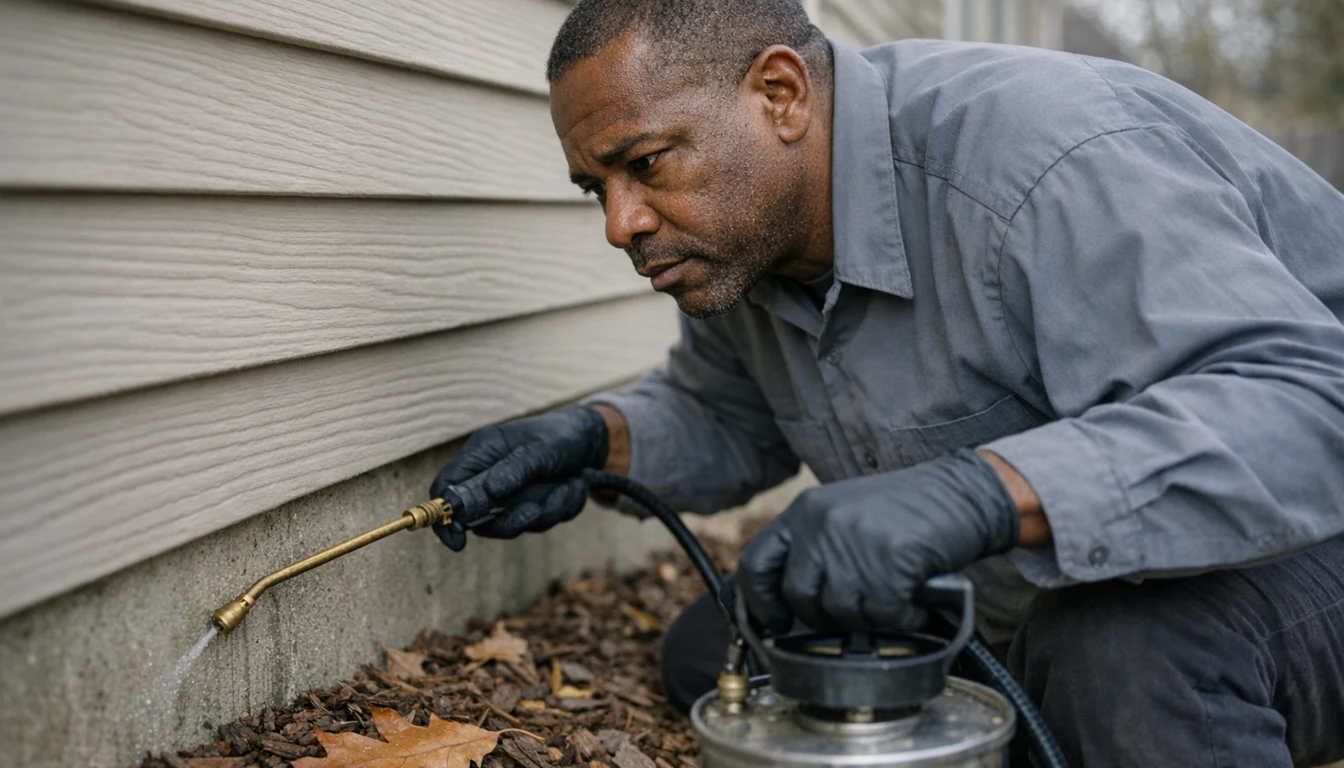
The ants showed up the second week of May, a neat little line from the window over the sink to the bag of brown sugar I’d left open. I wiped them up. They came back by dinner. By the end of the month I had three pest companies walk through the house, and their quotes for the same kitchen ran $145, $289 and a $59-a-month plan with a 12-month contract. Same ants, same house. That spread is why I sat down and figured out what pest control cost covers.
Below is what each kind of plan costs, what you pay by bug, where the contracts get sneaky, and the handful of jobs I do myself now so I only call a pro for the stuff that needs one.
Quick answer: a one-time general pest control visit runs about $150 to $400 in 2026, and quarterly service usually costs $100 to $200 per visit, or roughly $400 to $800 a year. Bed bugs and German cockroaches cost more because they take several treatments. Bed bug jobs commonly land between $1,000 and $4,000 for a typical home.
What pest control cost covers in 2026
A pest company’s price is mostly labor and a visit fee. The product they spray or bait with is a small part of it. When I asked the $289 company to break their number down, it came out like this.
- Inspection of the inside, the crawl space and the outside walls: included, but they told me it’s “worth $75”
- Exterior perimeter treatment around the foundation: $120
- Interior baiting in the kitchen and bathrooms: $95
- Follow-up visit in 30 days if the ants came back: $74
The $145 company only did the outside perimeter. No follow-up. The monthly plan was the cheapest per visit and the most expensive per year, which I’ll get to.
Most general plans cover what the industry calls “general pests”: ants, roaches, spiders, silverfish, earwigs, crickets. Rodents, termites, bed bugs, fleas and wildlife are usually extra, even on a plan. Read the list before you sign. I almost didn’t, and the plan I nearly bought excluded the carpenter ants that were half the reason I called.
One-time vs quarterly vs annual pest plans
This is where the quotes get confusing, because each company prices the same work a different way.
One-time visit. About $150 to $400. Good for a single problem, like my sugar ants, or before you move into a house. Some companies charge a higher “initial” fee because the first visit takes longer.
Quarterly service. The most common plan. You pay an initial visit, often $150 to $300, and then $100 to $200 every three months. They spray the outside, check the bait stations and come back free between visits if bugs show up.
Monthly or bi-monthly. Lower per visit, $40 to $70, but you’re paying 12 times a year. That $59 plan would have been $708 a year plus a $99 start-up fee. For ants. I passed.
Annual contract. Usually just a quarterly plan billed up front, sometimes with a small discount. Check the cancellation terms. Two of the three contracts I read had an early-cancel fee.
My take: if you live somewhere warm and humid where roaches and ants never really leave, a quarterly plan can make sense. In my climate, with a cold winter, a one-time visit plus some prevention on my end has held for two seasons now.
Pest control cost by bug: ants, roaches, fleas and mice
The bug changes the price more than the size of your house does. These are the numbers I’ve been quoted, plus what friends showed me from their own invoices.
Ants
Sugar ants and pavement ants are the cheap ones, often handled in one $150 to $300 visit with baits inside and a perimeter spray outside. Carpenter ants cost more, $250 to $600, because they nest in damp wood and the tech has to find the nest. If you see sawdust-like piles near a window frame, mention it on the phone so the quote isn’t a surprise.
Cockroach pest control cost
Roaches are where one visit almost never does it. A German cockroach problem in a kitchen usually takes two or three treatments a couple of weeks apart, and I’ve seen cockroach pest control cost quotes from $200 to $600 for that set. A bigger outdoor roach that wanders in from the yard is cheaper to deal with, closer to a general visit.
My neighbor had German roaches when she bought her condo. The first company sprayed once, charged $180 and left. They were back in three weeks. The second company used gel bait and came back twice, $425 total, and that’s the one that worked. Baits in cracks beat a spray on the baseboards for that kind of roach.
Fleas
Flea treatment usually runs $200 to $450 for the inside of a house, often with a second visit. The part people skip is the pet. The National Pesticide Information Center’s flea control page says a female flea can lay 30 to 50 eggs a day, and many of them fall off the animal into carpet and bedding. That’s why NPIC says to treat the pet and the house together, and to talk to a vet about the pet side. A flea pest control cost quote that ignores your dog buys you a second visit in a month.
NPIC also lists the boring stuff that helps: vacuum carpets and under the furniture, wash pet bedding on high heat, and steam-clean upholstery. I did all of that when my sister’s cat stayed with us for a month and left us a souvenir. It cost me a Saturday and zero dollars.
Mice
Mice are a separate job. Most pest plans don’t include them, and the real fix is sealing the holes, which is a different job. I wrote up the full numbers in my mouse exterminator cost guide, so I won’t repeat them here. Short version: exclusion work is where the money goes, and it’s worth it.
Pest control for bed bugs: the price nobody wants
A friend called me at 11 p.m. last fall, holding a flashlight over her mattress seam. The pest control bed bugs price is the one that makes people try to do it themselves, and I get why. Quotes I’ve seen for a two- or three-bedroom home run about $1,000 to $2,500 for a chemical treatment with follow-ups, and $1,500 to $4,000 for whole-home heat.
What made me drop the DIY idea was the National Pesticide Information Center. NPIC’s bed bug page says bed bugs are hard to control even for professionals, and many populations resist common pesticides. It also says “bug bombs,” the total-release foggers, don’t reach the places bed bugs hide. People buy a $15 fogger, set it off, and spread the bugs into the next room.
The same page says eggs hatch in 6 to 10 days, which is why one treatment isn’t enough and why a good quote includes at least one follow-up visit. If your quote doesn’t, ask why.
The parts you can do yourself, and should, cost almost nothing. NPIC says drying items on high heat for 30 minutes kills all life stages. Vacuuming, mattress encasements and cutting clutter help too. Those steps make the pro’s treatment work better. They don’t replace it. And if you’re in an apartment or a duplex, tell your landlord or neighbor. Bed bugs move between units.
What I DIY and what I pay a pest company for
I’m not a licensed applicator, and I’m not going to pretend a hardware store spray is the same as what a pro uses. But a lot of pest prevention is plain house maintenance, and that part is cheap.
Things I do myself:
- Seal gaps around pipes under sinks with caulk or expanding foam. About $12 for both.
- Store sugar, flour and pet food in sealed bins. The ant problem started with an open bag.
- Fix drips and keep the crawl space dry, since roaches, silverfish and ants all go where the water is.
- Store-bought ant bait stations for a small trail. About $8, and it handled a second round of sugar ants last spring.
- Trim shrubs back from the siding and keep mulch a few inches off the foundation.
Things I pay for: bed bugs, German roaches, carpenter ants, anything in the walls, and termites. For termites, start with an inspection. It’s cheap or free, and I covered it in my termite inspection cost post. If your crawl space is damp and the bugs keep coming back, the bugs might be the symptom. Sealing the space is the bigger fix, which I priced out in crawl space encapsulation cost.
The mistake I made the first year: I sprayed a perimeter product on the outside walls myself, didn’t read the label closely, and applied it right before a rain. It washed off. Twenty-two dollars, gone. Read the label and follow it. The directions are how the product is meant to work, and the rain warning was right there in small print.
Pest control cost breakdown, 2026 estimates
These ranges come from my own quotes, friends’ invoices and what local companies post on their price sheets this year. Use the table to sanity-check a quote, not as a price list.
| Service | Typical price | Visits included | DIY first? |
|---|---|---|---|
| One-time general visit | $150 to $400 | 1, sometimes a free re-treat | Yes, for small ant trails |
| Quarterly plan | $100 to $200 per visit, $400 to $800 a year | 4 plus call-backs | Prevention only |
| Monthly plan | $40 to $70 per visit, $480 to $840 a year | 12 | Prevention only |
| Ants (sugar or pavement) | $150 to $300 | 1 to 2 | Yes, baits first |
| Carpenter ants | $250 to $600 | 1 to 2 | No |
| German cockroaches | $200 to $600 | 2 to 3 | No |
| Fleas (inside the home) | $200 to $450 | 1 to 2, plus vet care for pets | Vacuum and wash first |
| Bed bugs, chemical | $1,000 to $2,500 | 2 to 3 | No, prep only |
| Bed bugs, whole-home heat | $1,500 to $4,000 | 1, often with a check visit | No, prep only |
| Mice | See my mouse exterminator guide; exclusion work drives the price | ||
What blows the pest control budget
- Signing a monthly contract for a one-time problem. A small ant trail doesn’t need 12 visits a year, and the early-cancel fee can cost more than the first treatment.
- Setting off foggers for bed bugs or roaches. They don’t reach where those bugs hide, so you pay for the fogger and then pay a pro to treat a problem that spread.
- Not asking what the plan excludes. Rodents, termites, bed bugs and carpenter ants are often extra, and you find out when the second invoice shows up.
Grab my free Project Cost Estimator. It has a tab for lining up three pest quotes: what’s covered, how many visits, the contract length and the cancel fee. That’s how I caught the $708-a-year ant plan.
Frequently Asked Questions
Is quarterly pest control worth it?
It depends on where you live and what you’re fighting. In warm, humid places where roaches and ants stay active most of the year, a quarterly plan often pays off. For a one-off problem in a cold climate, a single visit plus sealing gaps and storing food better is usually enough.
How many treatments does it take to get rid of bed bugs?
Usually two or three with chemical treatment, spaced out so the tech can catch bugs that hatch after the first visit. NPIC says eggs hatch in 6 to 10 days, so a quote with no follow-up is a red flag. Heat treatment is often one visit with a check afterward.
Can I do my own pest control?
For small ant trails, sealing gaps, fixing leaks and storing food, yes. For bed bugs, German roaches, termites and carpenter ants, I’d pay a licensed pro. If you use any pesticide yourself, read the label and follow it exactly.
Prices are 2026 estimates from my own quotes and friends’ invoices, and they vary by region, home size and how bad the problem is. Get at least three written quotes that list what’s covered. Tessa is a hands-on homeowner and DIYer, not a licensed pest control applicator.
Free DIY Project Cost Estimator
The spreadsheet I use to price out a project before I start, so a weekend job never blows the budget. Join the newsletter and I’ll send it over.
No spam, ever. Unsubscribe anytime. — Tessa
Keep reading — more on Remodel & Renovation Costs
Bathtub Replacement Cost: What My 3 Quotes Taught Me (2026)
Our upstairs tub had a crack running from the drain toward the front wall, about the…
Read article →
Chimney Cap Installation Cost (and Why a Missing One Costs More Later)
It started with a sound behind the living room wall. Scratching, then quiet, then scratching again,…
Read article →
Gutter Guard Installation Cost: Mesh, Screen, and Foam Compared
My mom has two big maple trees, and every October they drop what looks like the…
Read article →
Cabinet Refacing Cost vs Painting vs Replacing
My cousin Marisol’s kitchen has 24 cabinet doors, 8 drawer fronts and one door that only…
Read article →