
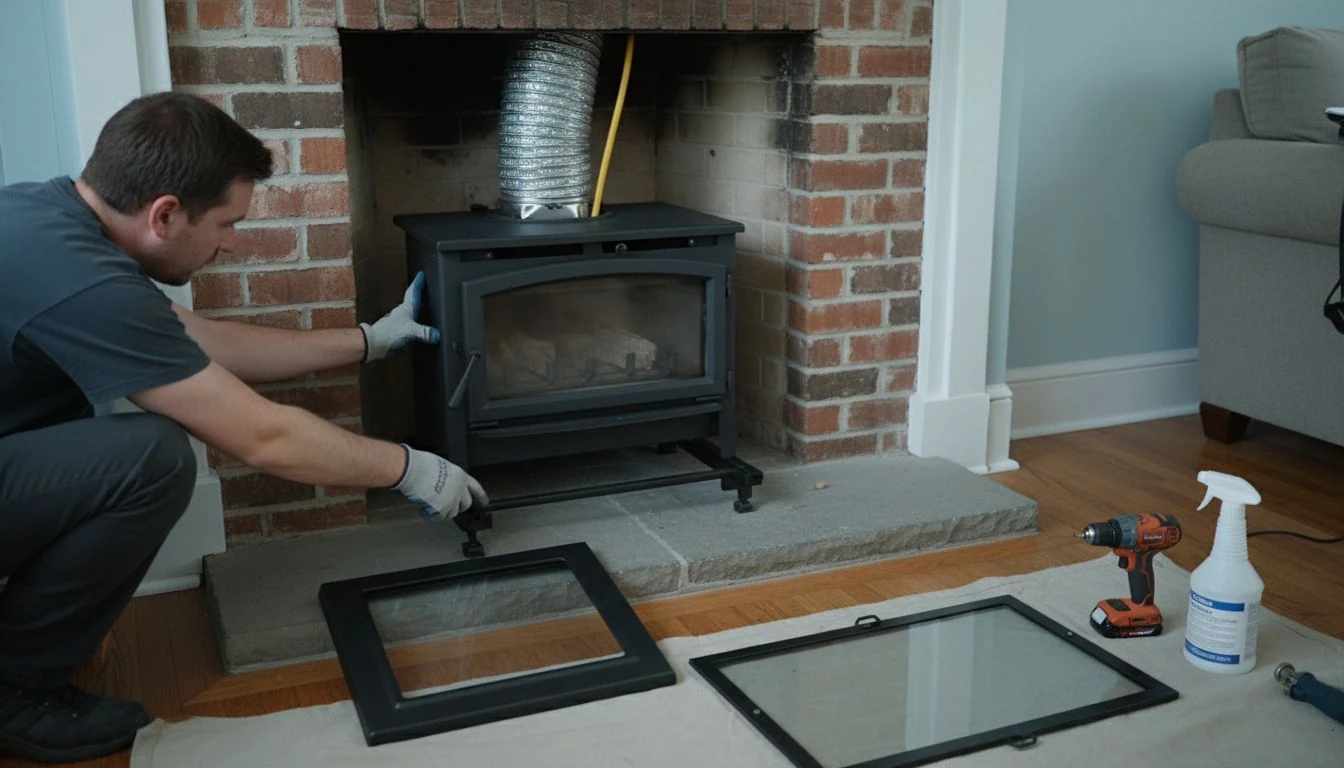
My sister Jen has a brick fireplace in her 1962 ranch that she has used exactly twice in six years. Both times the living room filled with smoke, the dog left the room, and she spent the next morning scrubbing soot off the mantel. Last winter she shut the damper, put a basket of fake candles in the firebox, and complained about the draft every time the wind came from the north.
This fall she asked me to help her price gas, and I found out the hard way that gas fireplace installation cost depends less on the fireplace than on what’s behind it. Her three quotes for the same opening were $4,850, $6,200 and $7,900. Nationally, a gas insert in an existing fireplace runs about $3,000 to $6,500 installed, a new built-in direct-vent unit about $4,500 to $10,000 or more, and a set of vented gas logs $600 to $2,500.
I’m Tessa. I’m not a gas fitter, and this is not a job I’d touch with my own wrench. But I can read a quote, and Jen’s three taught me where the money hides.
Insert, built-in, or gas logs: three different jobs
The phrase “gas fireplace” covers three products, and contractors quote them very differently. Ask for the one you mean by name.
A gas insert is a sealed metal firebox that slides into your existing masonry fireplace. It has a glass front, it pulls combustion air from outside and sends exhaust out through new liners run down the old chimney. This is what heats a room. It’s what Jen bought.
A built-in or zero-clearance gas fireplace is a whole new unit framed into a wall where there was no fireplace, vented straight out through the wall or up through the roof. It’s the most flexible and usually the most expensive, because you’re paying for framing, drywall, a surround and a new vent path on top of the unit.
Gas logs are ceramic logs on a burner set inside your existing open fireplace. They look like a fire. Vented logs need the damper open while they run, so a lot of the heat goes up the chimney with the exhaust. They’re the cheapest option and the least useful for warmth. Vent-free logs exist too, but they release combustion byproducts into the room, and some states and cities restrict or ban them, so check your local code before you fall in love with the price.
Jen’s three quotes for one fireplace insert
All three installers came out in the same week in late September, which turned out to be the last easy week to book anyone. By October the earliest install date any of them offered was after Thanksgiving.
Quote one, $4,850: a mid-size insert with a standing pilot and a wall switch, two aluminum flex liners down the existing flue, a gas line from a stub in the basement that was already 6 feet from the hearth, surround panel, permit and inspection. No blower.
Quote two, $6,200: a slightly larger unit with an electronic ignition, a variable-speed blower, a remote and a thermostat, the same liners and a similar gas run. They also added a chimney cap and a top-of-chimney termination kit, which quote one had folded in without listing.
Quote three, $7,900: a premium unit with a modern linear firebox, a larger blower and a thermostat that cycles the flame. They quoted a new gas line from the meter, about 35 feet, because their policy is not to tap an existing stub they didn’t install.
Jen took quote two. The blower is what turns an insert from a pretty fire into a heater that pushes warm air into the room. And the gas run in quote three was most of the price gap, about $1,100 of it. If you want to see why gas runs swing so much, my gas line installation cost guide has the per-foot numbers by pipe type.
Venting decides the gas fireplace installation cost
Every installer started at the chimney, not the hearth. An insert vents through liners inside your old flue, usually two flexible aluminum tubes, one bringing fresh air down and one sending exhaust up. The liners and the cap at the top typically run $500 to $1,500 depending on chimney height.
Before any of that goes in, the chimney has to be clean and sound. Jen’s needed a sweep and a Level 2 inspection first, which I’d covered when I wrote about what a chimney inspection costs, and hers came back with a cracked crown that the mason fixed for $450 before the insert went in. A gas insert doesn’t put creosote in the flue the way wood does, but the liner still runs through that masonry for the next twenty years.
If your chimney already has a stainless liner from a wood stove, ask whether it can be reused or adapted. Usually the answer is no for a sealed gas insert, which needs its own matched liners. I went deep on liner types and prices in the chimney liner cost guide when I priced a wood insert, and the gas side is cheaper, thinner and quicker.
No chimney at all? A direct-vent built-in goes through an exterior wall, often only a few feet of pipe. That’s why a built-in on an outside wall can cost less to vent than an insert in a tall two-story chimney, even though the unit costs more.
The gas line and the permit
The gas supply is the second big variable. If there’s a stub near the fireplace, a short connection might be $200 to $500. A new run from the meter or the main manifold, with a shutoff valve at the fireplace and a pressure test, can be $500 to $2,000 depending on distance and how much finished ceiling is in the way.
Every quote Jen got included a permit, and every one of them should. In her county the permit was $135 and an inspector came out to check the gas connection, the shutoff and the venting. If an installer offers to skip the permit to save you money, that’s the installer I’d skip.
Ask what’s not included. Common add-ons: removing the old glass doors and damper, a new electrical outlet behind the unit for the blower (about $150 to $300 from an electrician), refinishing the brick face, and haul-away of the old grate and ashes.
What a gas fireplace costs to run
Nobody asks this before they buy, and everybody asks it after the first bill. A typical insert burns around 25,000 to 35,000 BTU per hour on high. One therm is 100,000 BTU, so a 30,000 BTU insert uses about 0.3 therms an hour. At roughly $1.50 a therm, that’s about 45 cents an hour, or around $14 a month at an hour a day.
Jen runs hers on the thermostat in the evening and turns the furnace down a few degrees, since the living room is where she actually sits. That’s the honest way to think about a gas insert: zone heat for one room, not a replacement for your furnace.
A standing pilot burns gas all season, about $5 to $10 a month by itself. Electronic ignition costs more up front and pays some of that back. Ask which one you’re getting, because quote one didn’t say until I asked.
Safety: CO alarms, hot glass and annual service
This is the part that made me glad Jen didn’t try to save money on the install. Any appliance that burns gas makes carbon monoxide. The Consumer Product Safety Commission’s carbon monoxide information center says more than 200 people in the U.S. die every year from accidental non-fire CO poisoning, and it recommends CO alarms on every level of the home and outside sleeping areas. Jen’s house had one. It has three now, for about $90.
The glass on a gas insert gets hot enough to burn skin and stays hot well after the flame is off. New units are sold with a mesh safety screen in front of the glass. Keep it on, especially with kids, and ask about a retrofit screen if you’re inheriting an older unit.
Plan on yearly service, about $100 to $200 to clean the burner, check the pilot assembly and the venting. The U.S. Fire Administration’s heating fire safety tips say to have heating equipment and chimneys cleaned and inspected each year by a professional, and to keep anything that can burn at least 3 feet away from heat sources. For Jen, that meant moving the basket of fake candles and a stack of magazines off the hearth for good.
What you can do yourself
On the gas side: nothing. Gas connections, venting and the unit install belong to a licensed installer with a permit. I say that as someone who will happily tackle a leaky faucet on a Saturday.
Around the edges there’s real savings. You can clear the room and the hearth before the crew arrives, paint or limewash the brick face afterward (Jen did hers in an afternoon for about $60), and shop the unit size with a tape measure first. Measure the firebox opening width, height and depth, front and back, because fireplaces taper. Installers will remeasure, but walking in with numbers keeps you from falling for a unit that won’t fit.
And book the chimney work early. If your flue needs a sweep, our chimney sweep cost guide has what that runs, and doing it in September instead of November is the difference between a fire by Thanksgiving and a fire by Valentine’s Day.
Gas fireplace installation cost by type, 2026 estimates
These ranges come from Jen’s three quotes plus the line items the installers broke out when I asked, and they assume a standard single-story chimney or a simple outside-wall vent.
| Job | Unit | Venting | Gas line | Typical installed total |
|---|---|---|---|---|
| Vented gas logs in an open fireplace | $300 to $1,500 | Existing chimney | $200 to $800 | $600 to $2,500 |
| Gas insert, existing masonry fireplace | $1,800 to $4,000 | $500 to $1,500 (liners, cap) | $200 to $1,500 | $3,000 to $6,500 |
| Gas insert with blower, remote, thermostat | $2,800 to $5,000 | $500 to $1,500 | $200 to $1,500 | $4,500 to $8,000 |
| Built-in direct-vent, outside wall | $2,000 to $5,000 | $300 to $1,000 | $500 to $2,000 | $4,500 to $10,000+ with framing and surround |
| Permit and inspection | Varies by county | $75 to $300 | ||
| Yearly service | Burner, pilot and vent check | $100 to $200 | ||
What blows the gas fireplace budget
- Chimney repairs found on install day. A cracked crown, a missing cap or a damaged flue tile can add $300 to $2,000. Get the inspection done before you sign for the insert, not after.
- A long new gas run. This was most of the $1,100 gap between Jen’s second and third quotes. Ask each installer where they’ll tap the supply and how many feet that is.
- Waiting until the cold snap. Installers book out by October, and some charge more for rush dates. Measuring and quoting in September got Jen a firm install date and the price she was quoted.
Grab my free Project Cost Estimator. Give each installer a column and fill in unit, liners, gas run, permit and add-ons line by line. The missing lines are where the surprises live. It’s the same one-page sheet Jen and I used to compare her three quotes at her kitchen table.
Frequently Asked Questions
How much does it cost to install a gas fireplace insert?
In an existing masonry fireplace, a gas insert usually runs about $3,000 to $6,500 installed in 2026, including the unit, liners, gas connection and permit. Add a blower, remote and thermostat and it’s closer to $4,500 to $8,000. My sister’s three quotes for one fireplace were $4,850, $6,200 and $7,900, and the biggest difference between them was the length of the new gas line.
Is a gas fireplace insert worth it?
If you have a drafty fireplace you rarely use and you sit in that room in the evenings, usually yes. A sealed insert stops the draft, heats the room on its own thermostat, and costs roughly 45 cents an hour to run at typical gas prices. It won’t replace a furnace. Vented gas logs cost less but send much of their heat up the chimney, so they’re more about the look than the warmth.
Can I install a gas fireplace myself?
No. The gas connection, venting and unit install should be done by a licensed installer with a permit and inspection, and many manufacturers won’t honor a warranty otherwise. You can save money around the job by measuring the firebox, clearing the room, finishing the surround afterward, and booking the chimney sweep and inspection yourself before installers come out.
All prices are 2026 estimates from three quotes for one home plus installers’ itemized lines, and they vary by region, chimney condition, gas supply distance and the unit you choose. Tessa is a hands-on renter and DIYer, not a licensed gas fitter or contractor. Gas appliance installation requires a licensed professional and, in most places, a permit. Install CO alarms on every level of your home and have fuel-burning equipment serviced every year.
Free DIY Project Cost Estimator
The spreadsheet I use to price out a project before I start, so a weekend job never blows the budget. Join the newsletter and I’ll send it over.
No spam, ever. Unsubscribe anytime. — Tessa
Keep reading — more on Remodel & Renovation Costs
Whole House Humidifier Installation Cost (and Whether You Need One)
Last January the little hygrometer on my bookshelf read 21 percent. I’d bought it for $14…
Read article →
Shower Remodel Cost: Refresh, Walk-In, and Full Tear-Out
My mom called me in August because the floor of her shower had started to flex.…
Read article →
Gas Line Installation Cost: For a Stove, Dryer, Fireplace, or Generator
For nine days last winter, a brand new gas range sat in the middle of our…
Read article →
Drywall Installation Cost: Per Sheet, Per Square Foot, and Per Room
The back bedroom in our house had dark 1970s wood paneling, the kind that makes a…
Read article →