
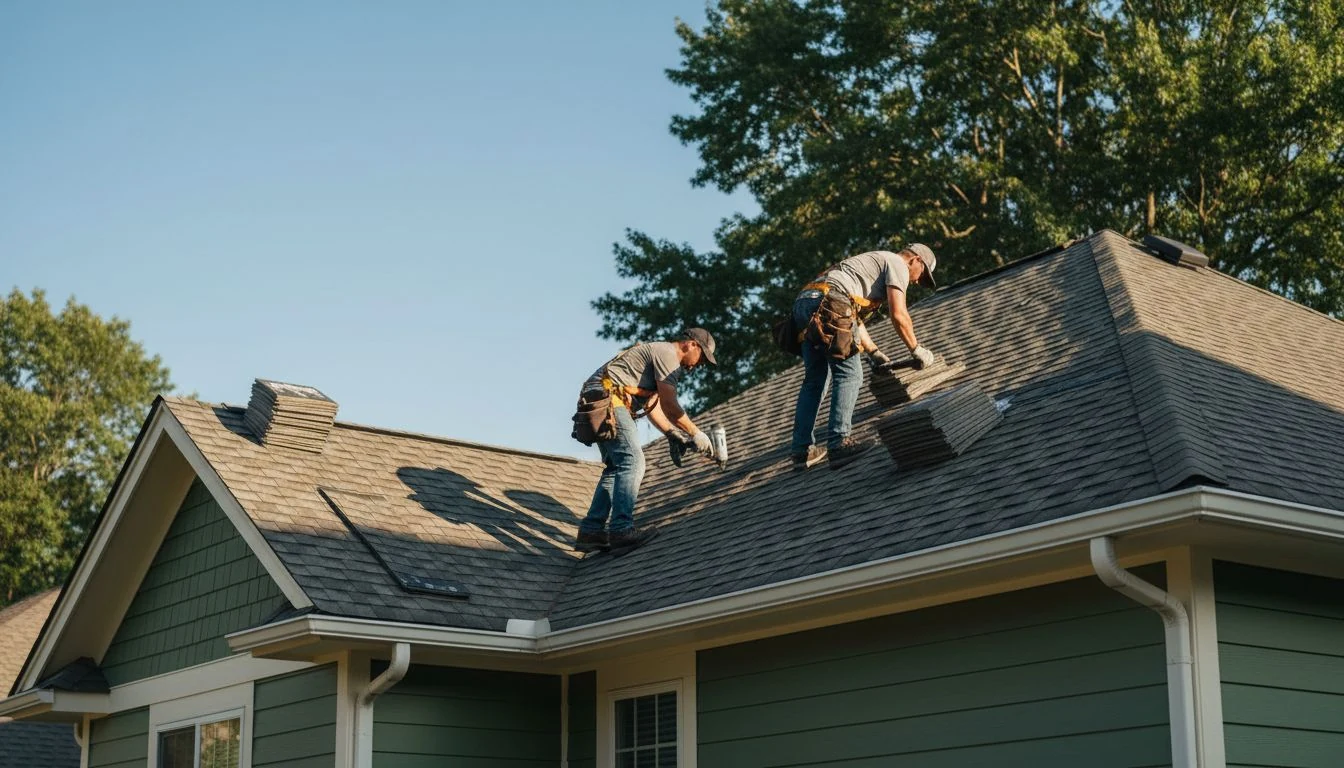
The first roofer who climbed onto my house quoted me $8,400. The second one, same roof, same week, said $19,000 and told me my decking was “probably all rotted” without lifting a single shingle to check. I stood in my driveway feeling like I’d asked two people to price the same car and gotten a Civic and a Cadillac. So I did what I always do when a number scares me: I went and learned what the job actually costs, line by line, before I signed anything.
Here’s the short version before the tables. The roof replacement cost for a typical single-family home in 2026 runs about $9,000 to $16,000 for architectural asphalt shingles, materials and labor together, with most people landing somewhere around $11,000 to $13,000. Cheaper 3-tab shingles can pull a whole roof down near $6,000 on a small, simple house. Metal, tile, and slate climb from there, fast, sometimes past $40,000. Below I break the roof replacement cost down by material, by roof size and pitch, and by the line items that quietly separate an honest bid from a scary one.
What does a roof replacement cost in 2026?
As of mid-2026, replacing the most common roof in America, architectural asphalt shingles on a standard single-family home, averages around $11,000 to $13,000 installed. That is the all-in number: tearing off the old roof, hauling it away, new underlayment and flashing, the shingles themselves, and labor. The fastest way to sanity-check any bid you get is by quality tier.
| Replacement level | What you get | 2026 installed cost |
|---|---|---|
| Budget | Basic 3-tab asphalt, small simple roof, single layer tear-off | $5,500 to $9,000 |
| Mid-range (most jobs) | Architectural asphalt shingles, average roof, new flashing & ridge vent | $9,000 to $16,000 |
| Premium | Metal, tile, slate, or wood shake; steep or complex roof | $16,000 to $45,000+ |
Most people reading this fall in the middle row. The budget tier is real, but 3-tab shingles are thinner, carry shorter warranties, and a builder will use them on a flip precisely because they are cheap. For a roof you want to forget about for 25 years, architectural shingles cost maybe 15 percent more and last noticeably longer. I went architectural and would do it again.
Roof replacement cost by material
The single biggest swing in your price is what you put on top. This is the same fork you hit when you price big exterior jobs, and if you are budgeting the whole house, my window replacement cost guide breaks materials down the same way. Here is how the common roofing materials compare, by price per “square” (roofers measure in squares, and one square is a 100-square-foot patch of roof) and by typical installed cost on an average home.
| Material | Installed per square (100 sq ft) | Typical whole roof | Lifespan |
|---|---|---|---|
| 3-tab asphalt | $350 to $500 | $5,500 to $11,000 | 15 to 20 yrs |
| Architectural asphalt | $450 to $700 | $9,000 to $16,000 | 25 to 30 yrs |
| Metal (standing seam) | $900 to $1,600 | $15,000 to $40,000+ | 40 to 70 yrs |
| Clay / concrete tile | $1,000 to $2,000 | $18,000 to $45,000 | 50+ yrs |
| Slate | $1,500 to $3,000 | $25,000 to $50,000+ | 75 to 100 yrs |
My pick for most homes is architectural asphalt. It is the value sweet spot: it looks far better than flat 3-tab, it shrugs off weather, and the price stays sane. Metal is a great call if you plan to stay put for decades, because it can outlive the mortgage, but the upfront jump is real and a sloppy metal install leaks worse than a sloppy shingle one. Tile and slate are gorgeous and basically permanent, but they are heavy enough that some homes need structural reinforcing to carry them, which is a cost most people forget. Skip wood shake unless you love the look and your insurer allows it, because in a lot of regions it raises your premium.
How roof size and pitch change the price
Two houses on the same street can get wildly different bids, and most of the gap comes down to math you can actually do yourself. Roofers price by the square, so a bigger roof simply has more squares. An average home has roughly 17 to 22 squares of roof surface, which is why “average” lands where it does. But footprint is only half of it.
The other half is pitch and complexity. A steep roof is slower and more dangerous to walk, so labor climbs. A roof chopped up with dormers, valleys, skylights, and three chimneys takes more flashing, more cutting, and more time than a simple gable. And if you have two or three old layers up there already, the tear-off and disposal cost more before a single new shingle goes on. When you are tallying a whole-house budget, I keep the running total in my home renovation costs guide, and the broader 2026 numbers live in my home improvement cost statistics roundup.
The hidden costs nobody puts on the roofing quote
Here is where my two “simple” quotes quietly differed by thousands. None of these line items is shady on its own. It only becomes a problem when a roofer leaves it off to win the bid, then bills it later as a surprise. Read every quote looking for these:
- Tear-off and disposal: $1,000 to $3,000 depending on how many old layers come off and the dump fees for the debris.
- Decking (plywood) replacement: $70 to $120 per 4×8 sheet. Honest roofers quote this as “if needed” and show you photos before charging it.
- Underlayment, flashing, drip edge, and ridge vent: $500 to $2,000. New flashing around chimneys and valleys is where most leaks start, so this is not the place to cheap out.
- Permit: $150 to $500 depending on your city, and almost always required for a full replacement.
- Steep-pitch or multi-story charge: add 10 to 30 percent for hard, high, or dangerous access.
- Gutters and skylights: a roofer is already up there, so replacing aging gutters or resealing skylights during the job is cheaper bundled than called back later.
The fix is simple. Before you compare prices, make every roofer bid the same scope in writing: number of layers removed, shingle line and warranty, flashing and underlayment included, and a per-sheet price for any decking they find bad. The cheapest bid that “forgot” the tear-off is not cheaper. It is quoting a smaller job. That same instinct runs through my whole checklist on whether a contractor quote is fair.
Grab my free Project Cost Estimator
I put every line on this page, with its 2026 price range and a DIY-or-pay-for-it tag, onto one printable sheet. Print it, fill in your roof size, material, and number of old layers, and you will have a real roof replacement number before you let a single salesperson onto your driveway. No fluff, no upsell.
Can you DIY a roof replacement?
I am going to be straight with you here, because I am the anti-gatekeeping one: a full roof tear-off is the one project on this whole site I tell people not to DIY. It is genuinely dangerous, the fall risk is real, a mistake leaks into everything below it, and doing it yourself usually voids the shingle warranty. What you can do is the small stuff around the edges to save money and stay ahead of damage. Here is roughly what each part runs, and who I would hand it to.
| Task | DIY cost | Pro cost | Who I’d give it to |
|---|---|---|---|
| Full tear-off & reroof | not advised | $9,000 to $16,000 | Pro, always — fall risk + warranty |
| Replace a few blown-off shingles | $30 to $80 materials | $150 to $400 call-out | DIY if the roof is low and dry |
| Reseal flashing or a small leak | $15 to $50 sealant | $200 to $600 | DIY a tiny spot; pro for valleys |
| Clean gutters & clear debris | $0 (your Saturday) | $150 to $350 | DIY — this is upkeep, not repair |
| Get a roof inspection | binoculars from the ground | $0 to $300 | Many roofers inspect free — use it |
The mistakes that cost you twice
- Taking the storm-chaser at your door. After a hailstorm, crews swarm neighborhoods with a too-good price, collect the deposit, and either vanish or rush a bad install, so the “deal” becomes a second roof a year later.
- Skipping the new flashing to save a few hundred. Reusing old, cracked flashing around chimneys and valleys is the number-one source of leaks, which means water in your attic and a repair that dwarfs what you saved.
- Roofing over the old layer instead of tearing off. A second layer hides rotten decking, adds weight, and shortens the new roof’s life, so you pay less today and replace the whole thing years early.
How to actually save on a roof replacement
You can shave real money here without buying a worse roof. Get at least three written bids, because, as my driveway taught me, the spread is enormous and the high number is not always the better crew. Buy in the off-season if you can, since late fall and winter are slower and some roofers discount to keep their teams busy. Choose architectural asphalt over premium materials if resale is not the goal. And bundle related work, like gutters, while the crew is already up there.
Where you should not cheap out: the underlayment, the flashing, and the install quality, because those are what keep water out for the next 25 years. A reflective cool-roof shingle can also trim your cooling bill in a hot climate, and ENERGY STAR’s cool roof guide points you to the Cool Roof Rating Council’s directory, the simplest way to check a product’s rated reflectance before you buy it. And if you are hiring out, vet the roofer hard, because roofing is a classic spot for the take-the-deposit-and-disappear move the U.S. Federal Trade Commission warns homeowners about. Check the license, ask for proof of insurance, and never pay the full amount up front.
FAQ
How much does a roof replacement cost in 2026?
The roof replacement cost for a typical single-family home in 2026 runs about $9,000 to $16,000 for architectural asphalt shingles, materials and labor together, with most homeowners landing near $11,000 to $13,000. A small, simple roof with basic 3-tab shingles can come in around $5,500 to $9,000, while metal, tile, and slate climb from $16,000 well past $40,000.
What is the cheapest roofing material to replace a roof?
3-tab asphalt shingles are the cheapest, at roughly $350 to $500 per square installed, which puts a small whole roof near $5,500 to $11,000. Architectural asphalt costs a bit more but lasts longer and looks better, so it is usually the smarter value. Metal, tile, and slate cost far more upfront but last decades longer.
How long does a roof replacement take?
An average asphalt roof on a single-family home takes a full crew about one to three days, weather permitting. Larger, steeper, or more complex roofs, and premium materials like tile or slate, can stretch to a week or more. Rain delays are common, so build a little slack into your timeline rather than scheduling it the day before an event.
Is it cheaper to repair or replace a roof?
Repairing a small, isolated problem, like a few blown-off shingles or one leak, is far cheaper at $150 to $600 and worth doing if the roof is otherwise sound and under 15 years old. But repeated repairs on an old, failing roof are throwing good money after bad. If the roof is near the end of its lifespan or has widespread damage, replacement is the cheaper choice over time.
Does insurance cover roof replacement?
Homeowners insurance usually covers a roof replacement when the damage comes from a sudden covered event, like a storm, hail, or a fallen tree, minus your deductible. It typically does not cover wear-and-tear or age-related failure, since that is considered maintenance. File promptly, document the damage with photos, and be cautious of storm-chasing crews who promise to “handle the whole claim” for you.
Prices in this guide are 2026 national estimates and vary a lot by region, roof size, pitch, material, and the condition of your decking. Always get itemized written quotes before you budget. I share what I have learned from my own projects and from getting quotes, not professional construction, insurance, or legal advice.
Free DIY Project Cost Estimator
The spreadsheet I use to price out a project before I start, so a weekend job never blows the budget. Join the newsletter and I’ll send it over.
No spam, ever. Unsubscribe anytime. — Tessa
Keep reading — more on Exterior & Structural Costs
Gutter Cleaning Cost: What I Paid, and the Month It Stops Being Optional
Gutter cleaning cost in 2026 runs $120 to $425 for most houses. Real quote numbers, what…
Read article →
Foundation Repair Cost in 2026: The Crack That Matters and the One That Does Not
A man in a branded polo put a level against my basement wall, made a face…
Read article →
Roof Repair Cost in 2026: What It Costs by What Actually Broke
The stain showed up on the upstairs hallway ceiling the morning after a March storm, about…
Read article →
Garage Door Spring Replacement Cost in 2026 (and Why I Do Not DIY This One)
It sounded like a rifle going off in the garage at 6:40 on a Tuesday morning.…
Read article →