
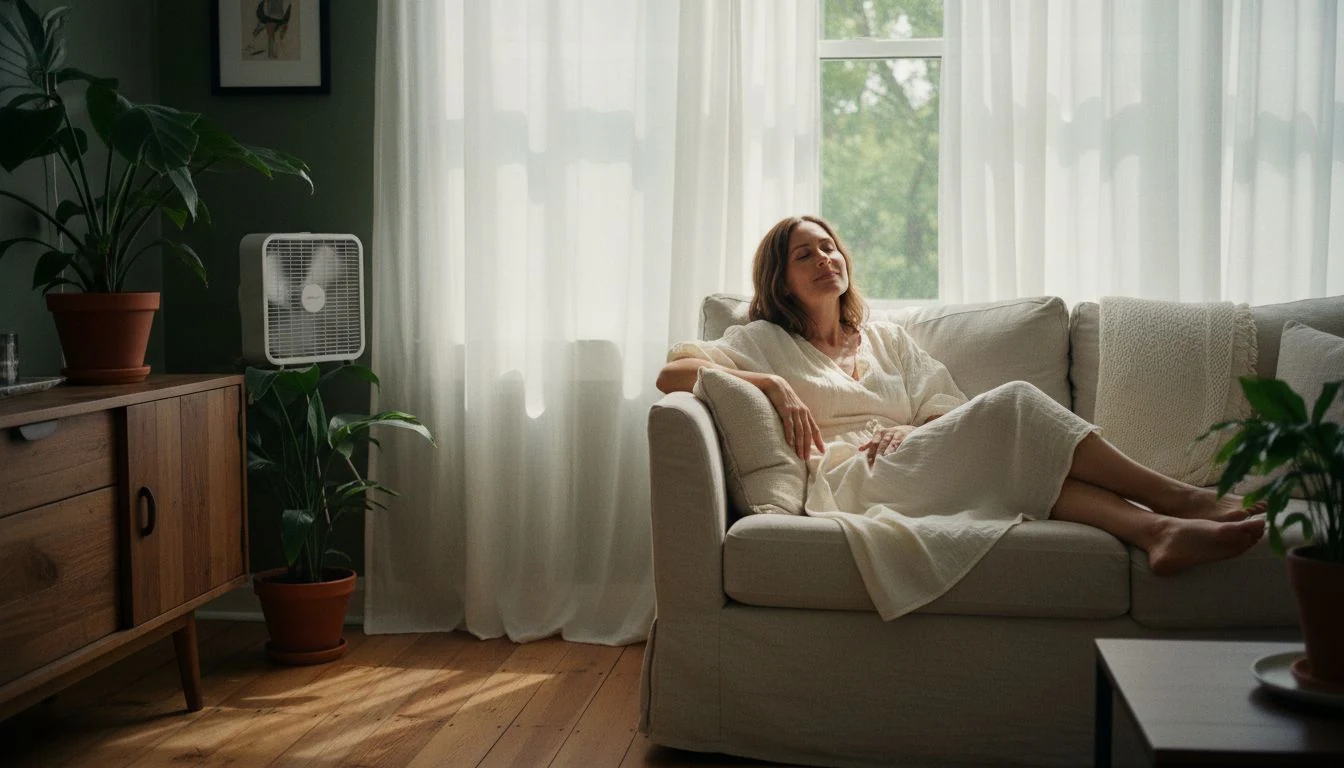
My first summer in this house, I ran the AC like it owed me money and got a $214 electric bill for July. I about fell over. The next month I decided to see how long I could go without touching the thermostat, half out of spite, half out of curiosity. I lasted almost three weeks, the house stayed livable, and I knocked nearly $90 off the bill. None of it was fancy. Most of it cost me less than a pizza.
The honest version of how to keep house cool without AC, before I get into the room-by-room stuff, comes down to three moves. You block the sun before it turns your rooms into an oven, you move air so your skin can shed heat, and you dump the hot air at night and trap the cool. That’s the whole game. Everything below is just a cheaper, smarter way to do one of those three, and I’ll tell you what each fix actually costs.
How to keep house cool without AC: the three moves that matter
Before you buy a single thing, understand where the heat is coming from. On a hot day, most of the warmth in your house walked in through your windows as sunlight and radiated off your walls and roof. Your AC’s job is to haul all that back out, which is why cooling can eat the biggest slice of a summer power bill. According to the U.S. Department of Energy’s Building America Solution Center, high-efficiency window shades, opened and closed at the right times, cut whole-home summer cooling energy by 15% to 25% in DOE field studies, which is why blocking that sunlight before it gets inside is where I start. Stopping heat at the glass beats fighting it once it’s inside, every time.
The three moves, in order of bang-for-buck: block the sun, move the air, flush the heat at night. Everything else people tell you about how to keep house cool without AC is a variation on those three. Do the first one and you’ll feel a difference by that afternoon.
Block the sun before it cooks the room
South- and west-facing windows are the worst offenders. Mine turned the living room into a greenhouse by 3 p.m. until I got serious about covering them. The single best thing I did was hang cheap blackout curtains, around $25 to $40 a panel, and actually close them during the hottest part of the day. It feels wrong to sit in a dim room at noon. Do it anyway. A dim, cool room beats a bright, sweaty one.
If curtains aren’t your thing, reflective window film runs about $20 to $30 for a roll and sticks right to the glass, bouncing sunlight back out before it becomes heat. Outside, anything that shades the glass helps even more, because it stops the sun before it ever hits the window. A cheap bamboo shade on the porch, an awning, even a leafy plant in the right spot. When I finally stopped the afternoon sun from blasting my west windows, the room stayed a good few degrees cooler with nothing running. If your windows are old, thin, and leaking heat year-round, that’s a bigger conversation, and I break the numbers down in my window replacement cost guide.
Move the air the smart way (fans beat AC for pennies)
People get this backwards: a fan doesn’t cool the air. It cools you, by moving air across your skin so sweat can evaporate. That means running a fan in an empty room is just spinning your meter for nothing. Point it at people, and turn it off when you leave.
My cheapest win all summer was a $20 box fan in the right window. In the evening, once it’s cooler outside than in, put a box fan in a window facing out on the warm side of the house, and it’ll shove hot indoor air out. Crack a window on the opposite, cooler side, and you pull a cross-breeze straight through the house. If you’ve got a two-story place, put the exhaust fan upstairs where the hot air collects and let the cool air get pulled up from below. I ran two box fans this way and it moved more air than my AC ever did on “low.”
Ceiling fans help too, but only if they’re spinning the right way. In summer the blades should turn counterclockwise so they push air down at you. There’s a little switch on the housing. Flip it, stand under it, and you’ll feel the difference immediately. And do turn it off when you leave the room, because a ceiling fan cooling nobody is just a heater for your wallet.
Grab my free Project Cost Estimator
I put every fix on this page, with its real 2026 price and roughly how much cooling it buys you, onto one printable sheet. Print it, check off the ones that fit your house and your budget, and you’ll have a stay-cool plan that costs less than one month of cranking the AC. No fluff, no upsell.
The nighttime flush: cool the house while you sleep
This is the trick that made going without AC bearable, and it costs exactly nothing. In most of the country, the air outside drops well below your indoor temperature overnight. The second it’s cooler outside than in, usually mid-evening, open everything up. Windows, box fans on exhaust, cross-breeze going. Let the house dump all the heat it soaked up during the day.
Then, and this is the part people skip, close it all back up in the morning before the sun gets high, usually by 8 or 9 a.m. You’re trapping that cool night air inside and locking the heat out. Done right, a well-shaded house can coast through most of a hot day on last night’s cool. I basically turned my house into a cheap cooler: open at night, sealed by morning. Some mornings I’d forget and leave a window open, and by noon the whole point was blown. Set a phone reminder if you’re forgetful like me.
Seal the leaks that let your cool air escape
All that free night cooling leaks right back out if your house is full of gaps, and a leaky house is a hot house in July and a cold one in January, so this one pays you twice. Grab a $10 to $15 roll of foam weatherstripping and run your hand around your doors and windows on a breezy day. Where you feel air sneaking in, seal it. A door sweep for the gap under an exterior door is another few bucks and stops a surprising amount of hot air. While you’re at the front door anyway, it’s a good moment for the quick refresh I walk through in my weekend front door refresh.
Don’t forget the sneaky heat sources inside. Incandescent bulbs throw off real warmth, so swapping them for LEDs cools the room a touch and cuts the bill. Cooking on the stove or running the oven at 6 p.m. in a heat wave is fighting yourself, so I move to the microwave, the grill outside, or cold dinners on the worst days. Little stuff. It adds up.
Cheap upgrades that punch way above their price
If you want to spend a little to save a lot, these are where I’d put the money, roughly in the order I’d buy them. This is the same “do it yourself where it’s smart, pay only where it counts” thinking I bring to bigger jobs in my roundup of quick summer DIY projects. Prices below are general 2026 estimates and vary by region, home size, and how much you’re cooling.
| Fix | Rough 2026 cost | How much cooling it buys |
|---|---|---|
| Box fan (window exhaust + cross-breeze) | $18 to $30 each | High — the workhorse of the whole plan |
| Blackout curtains, sunny windows | $25 to $40 per panel | High — kills afternoon greenhouse effect |
| Weatherstripping + door sweep | $10 to $25 total | Medium — keeps night cooling inside |
| Reflective window film | $20 to $30 per roll | Medium to high on west windows |
| Swap bulbs to LED | $2 to $5 per bulb | Low, but cuts the power bill too |
| Reversible ceiling fan (if you don’t have one) | $60 to $150 installed | Medium — comfort in the rooms you live in |
What wastes your money when you’re trying to stay cool
- Running fans in empty rooms. A fan cools skin, not air, so a fan spinning for nobody just adds heat from the motor and runs up your bill for zero comfort.
- Buying a cheap portable AC to “avoid” AC. Single-hose portable units are power-hungry and weak, and you’ll spend $300 to $500 to cool one room badly when box fans and shade would’ve done more.
- Ignoring the attic. A blazing hot attic radiates heat down into your ceilings all night, so skipping cheap attic ventilation or a $15 roll of insulation means you’re cooling against a furnace over your head.
When keeping cool without AC isn’t enough
I’m not going to be a hero about this. There’s a point where no box fan saves you. If you’re in a humid climate where the night air never really cools down, or you’re dealing with a real, dangerous heat wave, or you’ve got kids, older folks, or health conditions in the house, cooling is a safety issue, not a budgeting game. The U.S. Environmental Protection Agency is clear that extreme heat is dangerous, and on those days you run the AC, or you go somewhere that has it. That’s not failure, that’s sense.
And if your AC is running but barely keeping up, don’t assume you need a whole new system. Half the time it’s a cheap fix, and I lay out the real numbers so nobody overcharges you in my AC repair cost guide. Learning how to keep house cool without AC was never about suffering to save a few dollars. It’s about not paying to cool a house that’s leaking heat out of every gap, so that when you do run the AC, it’s doing a fraction of the work.
FAQ
How do I keep my house cool without AC in a heat wave?
Block the sun on your south and west windows with blackout curtains or reflective film during the day, run box fans to create a cross-breeze pointed at people, and open the house up at night to flush the hot air, then seal it back up in the morning to trap the cool. On a genuinely dangerous heat-wave day, though, treat cooling as a safety issue and use AC or go somewhere air-conditioned.
Do fans actually cool a room without AC?
A fan doesn’t lower the air temperature, it cools your skin by helping sweat evaporate, so it only helps when someone’s in the room. The real cooling trick is using box fans in windows to push hot indoor air out and pull cooler outdoor air in, especially in the evening. Point fans at people, and turn them off when you leave.
What’s the cheapest way to keep a house cool without AC?
A $20 box fan in the right window plus closing your blinds during the day is the cheapest high-impact combo, and the nighttime flush, opening up when it cools off and sealing up by morning, costs nothing at all. Add $10 to $15 of weatherstripping to keep that cool air from leaking out and you’ve done the most valuable 90 percent of the work for under $50.
Which way should a ceiling fan spin to keep a room cool?
In summer a ceiling fan should spin counterclockwise, which pushes air straight down and creates a breeze you can feel. There’s usually a small switch on the fan housing to reverse the direction. Remember it only helps people in the room, so turn it off when the room’s empty.
Does closing curtains actually keep a house cooler?
Yes, and it’s one of the biggest cheap wins. A large share of a room’s heat comes from sunlight streaming through the glass, so closing blackout curtains or blinds on your sunniest windows during the hottest hours can keep a room noticeably cooler with nothing running. Cover the west-facing windows first, since they take the brutal afternoon sun.
The prices here are 2026 national estimates and vary by region, home size, climate, and how much of your house you’re cooling. Extreme heat can be dangerous, so please don’t tough it out when the temperature is genuinely unsafe. I share what I’ve learned keeping my own house comfortable on a budget, not professional HVAC, electrical, or medical advice.
Free DIY Project Cost Estimator
The spreadsheet I use to price out a project before I start, so a weekend job never blows the budget. Join the newsletter and I’ll send it over.
No spam, ever. Unsubscribe anytime. — Tessa
Keep reading — more on Easy DIY & Repairs

Water Heater Flush: How to Do It Yourself (and What a Plumber Charges)
The first winter in this house, the water heater in my basement started making a noise…
Read article →
Mini Split Maintenance: The DIY Checklist and What a Pro Charges
The smell showed up first. Our mini split lives in the room over the garage, the…
Read article →
How to Patch a Drywall Hole (The Three Sizes, and the One You Should Not DIY)
The doorknob went through the hallway wall on a Tuesday, and I want to be honest…
Read article →
How to Fix a Dripping Kitchen Faucet (Cartridge, O-Rings, and the Sprayer Hose Nobody Checks)
My kitchen faucet dripped for a summer. I told myself it was the aerator, because the…
Read article →