
A man in a branded polo put a level against my basement wall, made a face I am sure he practices, and wrote $14,200 on a folded brochure. I had called him about one crack.
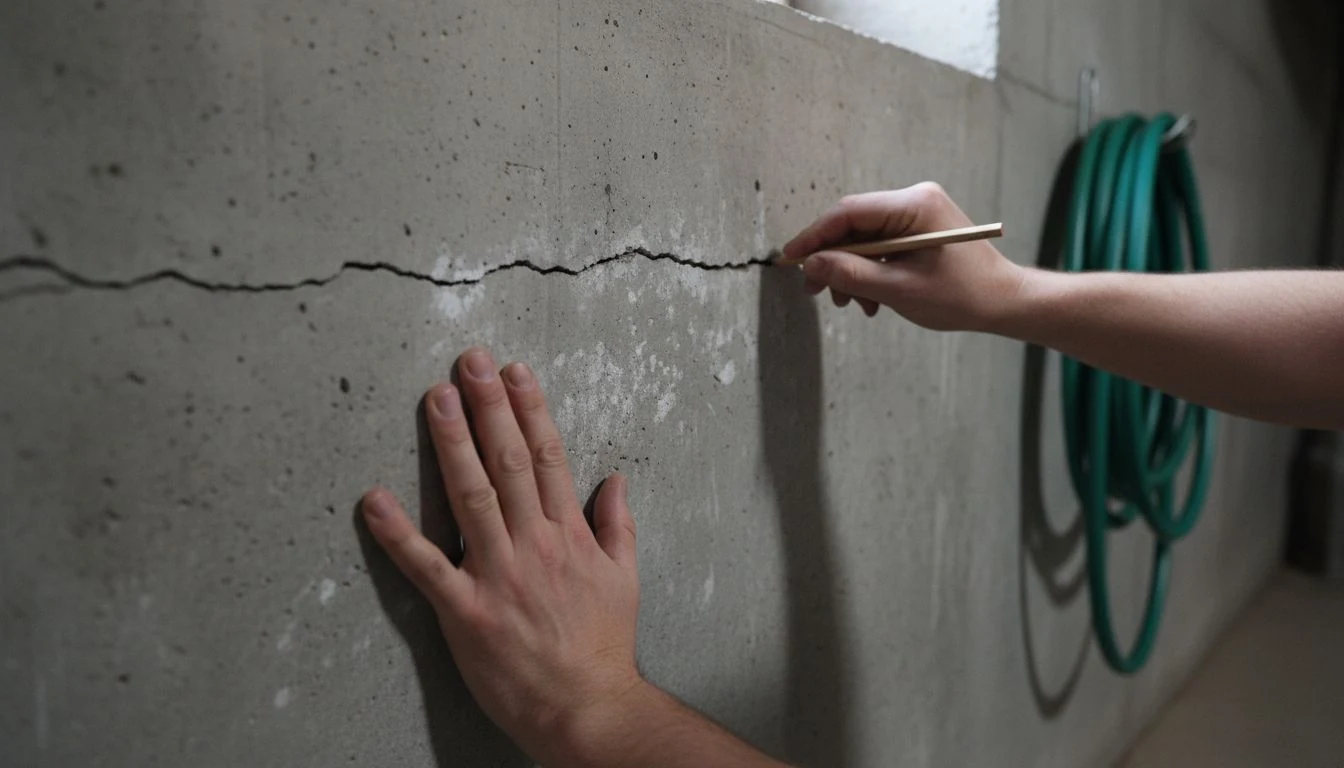
The crack ran from the floor up toward the window, thin at the top, maybe the width of a dime edge. It had been there since we bought the house. I noticed it that spring because the light hit it differently, and I did what everybody does, which is search the phrase and then call the company with the truck that says free inspection.
Foundation repair cost in 2026 runs about $500 to $1,500 to seal a crack that is only a crack, and $10,000 to $30,000 to underpin a house on piers. The national average lands near $5,100, with most projects between $2,200 and $8,100. That spread is not regional pricing. It is the difference between two completely different problems that look identical to a homeowner standing in a basement with a flashlight.
This post is the filter I did not have that spring. Which crack matters, which one is concrete doing what concrete does, what each fix costs, and the $500 I spent to learn that my $14,200 quote was for nothing at all. I am a homeowner who has now read four foundation quotes at her own kitchen table. I am not an engineer, and the whole point of what follows is that you should go hire one.
Jump to what you need:
- Foundation repair cost in 2026, in plain numbers
- The crack that matters and the one that does not
- Why the ground under your house moved
- Foundation repair cost by the fix, not by the fear
- The $500 I spent to not spend $14,200
- What the free in-home inspection is actually for
- Cost by symptom, and who you should be calling
- FAQ
Foundation repair cost in 2026, in plain numbers
Four jobs hide under one phrase, and they are not on the same planet financially.
$500 to $1,500 seals a non-structural crack. Polyurethane or epoxy injected from the inside, an hour or two of work, one visit. This is most cracks in most houses.
$1,500 to $5,000 covers drainage and slab leveling work: regrading the dirt away from the house, extending downspouts, or lifting a sunken slab section with polyurethane foam or mudjacking.
$5,000 to $15,000 is real stabilization. Carbon fiber straps or steel beams on a bowing basement wall, a partial row of piers under one settled corner, or an interior drain system with a sump.
$10,000 to $30,000 and up is underpinning. Steel push piers or helical piers driven down to load-bearing soil, at roughly $1,200 to $3,000 per pier, and a house needs anywhere from six to twenty of them. Add excavation. Then add the landscaping and the patio that get taken apart to reach the footing.
These are 2026 estimates and they move hard with your soil, your access, and whether the work happens inside or requires digging the whole perimeter. Almost nobody needs the fourth category. Almost everybody gets quoted for it.
The crack that matters and the one that does not
I wish somebody had walked me through this before I picked up the phone.
Poured concrete shrinks as it cures, and it keeps shrinking for years afterward. Thin vertical or slightly diagonal cracks, narrower than an eighth of an inch, running from the corner of a window or from the floor upward, are usually exactly that. They can weep water in a heavy rain, which is annoying and worth sealing. They are not the house failing.
Stair-step cracks in block or brick, following the mortar joints, mean one part of the house has moved relative to another. Sometimes that movement is seasonal and long finished. It gets serious when the crack is wider than a quarter inch, when one side sits proud of the other so you can catch the ledge with a fingernail, or when it keeps opening.
The one that matters is the horizontal crack across a basement wall, usually about a third of the way down from the top. That is not the house settling. That is soil pushing sideways against a wall built to hold weight down, not to hold a hillside back. If the wall also bows inward, even slightly, stop reading listicles and call someone. Same goes for a stair-step crack that widens toward the top, a gap opening where the wall meets the ceiling, or doors and windows on one side of the house that suddenly will not latch.
And there is a free move that beats all of this. Draw a pencil line across each end of the crack, write the date beside it, and photograph it with a tape measure held across the widest point. Do it again in three months. A crack that has not moved in a season is a piece of history. A crack that has opened a sixteenth of an inch is a live problem, and now you have proof instead of a feeling. I did not do this the first time. It cost me the entire mess below.
Grab my free Project Cost Estimator. Put in which symptom you actually have, whether the fix is interior or needs digging, and your metro, and you walk into the first sales visit already holding your own number. When one company says $14,200 and an engineer says do nothing, the only thing that keeps you upright is having done the math before the truck pulls in.
Why the ground under your house moved
Foundations rarely fail on their own. The dirt moves and the concrete goes along with it, and the dirt moves because of water.
Clay soil swells when it is wet and shrinks when it dries, so a drought summer followed by a soaking fall works your footings like a slow hinge. That is why cracks get noticed in bad drought years, and why the neighbor with the same builder and the same build year has nothing to report.
There is a bigger version of this that never makes it into a foundation ad. The U.S. Geological Survey reports that more than 17,000 square miles across 45 states have been affected by land subsidence, an area roughly the size of New Hampshire and Vermont put together, and that more than 80 percent of it traces back to people pumping groundwater out from underneath. If you live somewhere that has been drawing hard on an aquifer for decades, the ground under the entire neighborhood is doing something no pier under your house was designed to argue with.
That matters for one practical reason. The cheap fixes are almost always water fixes. Gutters that discharge six feet out instead of two, soil graded to fall away from the house, and a downspout that is not quietly dumping four hundred gallons against one corner every storm. I spent $180 on downspout extensions and a yard of topsoil. It is the highest-return money I have put into this house.
Foundation repair cost by the fix, not by the fear
Once you know what is actually wrong, the pricing gets boring. That is how it should be.
- Crack injection, epoxy or polyurethane. Roughly $500 to $1,500 per crack. Epoxy is rigid and structural, polyurethane is flexible and better at stopping water. A contractor who cannot tell you which one they are using and why is not the contractor.
- Carbon fiber straps on a bowing wall. Commonly $600 to $1,200 per strap installed, spaced every four to six feet along the affected run. Suited to walls that have bowed a small amount and stopped.
- Steel I-beams or wall anchors. Roughly $700 to $1,500 each. Anchors need yard access to set the far plate, so that price includes digging up part of your lawn.
- Slab leveling. Mudjacking runs about $600 to $2,000. Polyurethane foam runs about $1,300 to $3,000 and cures in minutes rather than a day.
- Piering and underpinning. $1,200 to $3,000 per steel push pier, $1,500 to $2,500 per helical pier, and a full job of $10,000 to $30,000. Ask how many piers, at what spacing, and to what depth, in writing.
- Interior drain tile and a sump. Roughly $4,000 to $12,000. This is a water management system. It stabilizes nothing structurally, and it should never be sold to you as though it does.
- An independent structural engineer. $350 to $800 for a site visit and a written letter. Read the next section before you decide to skip this line.
The $500 I spent to not spend $14,200
After the brochure with the number on it, I finally did the thing my brother-in-law had been telling me to do for a year and hired a licensed structural engineer. Not a foundation company. An engineer, who sells nothing, installs nothing, and gets paid the same whether my house is fine or sliding into the yard.
He was there about forty minutes. He shot the floor with a laser level in six places, put a straightedge on the wall, looked at the crack, and asked when the house was built and what the gutters did. Then he wrote me a two-page letter saying the wall showed no measurable deflection, the crack was consistent with shrinkage, and his recommendation was to seal it, correct the grade on the north side, and re-measure in twelve months.
$500. Against $14,200.
Sealing the crack cost me $620, from a different company that did nothing but that one job. Total damage was $1,300 including the dirt and the downspouts, and I have a signed engineering letter in the file for whenever I sell this house, which carries its own weight with a buyer’s inspector.
Now the part I got wrong, because I earned it honestly. Since the first crack turned out to be nothing, I spent the next two years waving off a horizontal line low on the garage wall as more of the same. It was not the same. That one was lateral pressure, it had been opening the whole time, and it needed carbon fiber straps and a regrade at around $3,400. Being right once made me lazy about the one that mattered. Get the letter, then keep measuring anyway.
What the free in-home inspection is actually for
It is a sales call. That is the business model working exactly as designed, and naming it correctly is what lets you sit through one without getting hurt.
The Federal Trade Commission’s guidance on home improvement scams lists the tactics almost word for word: pressure for an immediate decision, payment for everything up front, and asking you to pull the required building permits, which slides the liability for a failed inspection onto the homeowner. The FTC also says to get multiple estimates, not to automatically take the lowest bidder, and to ask for an explanation when the estimates differ wildly. Mine differed by $14,200 and zero.
One more thing almost nobody hears about. Sign a contract in your own home rather than at the company’s place of business and you get a written right to cancel within three business days, with that notice printed in the paperwork. A today-only discount is aimed straight at that cooling-off period. Say so out loud and watch what happens to the price.
My rule now is short. The company that diagnoses the problem should not be the company that sells the cure. Pay an engineer for the diagnosis, then hand that letter to two or three contractors and ask them to bid the exact scope written in it. The bids come back within a few hundred dollars of each other, because there is nothing left for anyone to invent. It is the same discipline I use on every other trade, and I laid out how I compare them in my guide to telling whether a contractor quote is fair.
Foundation repair cost by symptom, and who you should be calling
| What you are seeing | What it usually means | Who to call first | Estimated 2026 range |
|---|---|---|---|
| Hairline vertical crack, under 1/8 in., not moving | Concrete shrinkage, often there since year one | Nobody yet. Pencil it and date it | $0 to $620 to seal |
| Crack weeping water after heavy rain | Water management, not structure | Waterproofing contractor | $500 to $1,500 |
| Stair-step crack in block, under 1/4 in., no offset | Old differential movement, often stable | Monitor 3 months, then an engineer | $350 to $800 to confirm |
| Stair-step crack over 1/4 in., or one side offset | Active movement in one section | Structural engineer, before any bid | $3,000 to $12,000 |
| Horizontal crack, or a wall bowing inward | Lateral soil pressure. The serious one | Structural engineer, this week | $5,000 to $15,000 |
| Sunken driveway, patio or garage slab | Voids under the slab, usually not the house | Slab leveling contractor | $600 to $3,000 |
| Sloping floors, doors not latching on one side | Settlement under a footing or a beam | Structural engineer, before any bid | $10,000 to $30,000 |
| Water puddling against the house, no cracks yet | Grading and gutters, the cheap save | Yourself, this weekend | $120 to $600 |
What blows the foundation repair budget
- Letting the seller of the cure write the diagnosis. A $350 to $800 engineer’s letter is the cheapest line on this entire page, and it is the one that decides whether the rest of the page even applies to you. Mine turned $14,200 into $620 of sealant.
- Buying piers for a water problem. Underpinning stabilizes a house that is sinking. It does nothing for a wall that leaks or a slab that heaves, and those two are far more common. If a proposal jumps straight to piers without a floor elevation survey, ask to see the elevation numbers.
- Forgetting everything that has to be taken apart. Exterior piers mean trenching around the footing, so the deck, the patio, the AC pad and the shrubs are all in the way. Get restoration named in the contract, in writing, or you will pay for that landscaping twice.
Before you price a sill plate or a rim joist, rule out insects, because a termite inspection is cheap or free.
Water against the foundation is what cracks it, so before you pay for wall repairs, make sure the basement pit can keep up. Here is the sump pump replacement cost, with backups and new pits.
Frequently Asked Questions
How much does foundation repair cost in 2026?
Most homeowners land between $2,200 and $8,100, with a national average near $5,100. Sealing a non-structural crack runs $500 to $1,500, drainage and slab leveling $1,500 to $5,000, wall stabilization $5,000 to $15,000, and full underpinning on piers $10,000 to $30,000 at roughly $1,200 to $3,000 per pier. The range is enormous because those four are not the same job.
Which foundation cracks are serious?
Horizontal cracks in a basement wall are the ones to act on, especially with any inward bow, because they point to soil pressure rather than settling. Also treat stair-step cracks wider than a quarter inch, cracks where one side is offset from the other, gaps opening where a wall meets the ceiling, and doors that stop latching on one side of the house. Thin vertical cracks under an eighth of an inch in poured concrete are usually shrinkage.
Should I hire a structural engineer or a foundation company first?
The engineer, always. Expect $350 to $800 for a visit and a written report. They sell no repairs, so the recommendation is not attached to a product, and the letter becomes the scope that contractors bid against. Handing three companies the same written scope is the whole reason their numbers come back comparable.
Can I just monitor a crack instead of repairing it?
For a thin, non-structural crack, yes, and monitoring is the correct first step. Mark each end in pencil with the date, photograph it with a tape measure across the widest point, and repeat in three months. No movement over a season points to something old and stable. Any measurable widening, or any horizontal crack at all, moves you to a professional now rather than next season.
Does homeowners insurance cover foundation repair?
Usually not. Standard policies typically exclude damage from earth movement, settling, and poor drainage or maintenance, which is most of what causes foundation problems. There are exceptions for a sudden covered event, such as a burst supply line washing soil out from under a footing. Read your own exclusions page before assuming either way, and get your agent’s answer in writing.
Do I need a permit for foundation work?
Structural work such as underpinning, piering and wall anchors typically requires a permit and an inspection, and the licensed contractor should pull it in their own name. The FTC lists a contractor asking the homeowner to pull the permits as a warning sign, precisely because it shifts responsibility for passing that inspection onto you. Crack sealing generally does not require a permit.
If you are pricing this against everything else the house is asking for this year, the whole-house view lives in my home renovation cost guide, the running figures sit in my home improvement cost statistics roundup, and if the basement is where all of this is headed anyway, start with what it costs to finish a basement.
All prices here are 2026 estimates and vary by region, soil type, equipment access, the extent of the movement, and how much landscaping or hardscape has to be removed and restored. Tessa is a hands-on homeowner, not a licensed structural engineer or contractor. Nothing here is an engineering assessment of your house. Any horizontal crack, bowing wall, or floor that has visibly changed slope belongs to a licensed structural engineer, in person. Use these ranges to ask sharper questions and to compare two written quotes against one written scope.
Free DIY Project Cost Estimator
The spreadsheet I use to price out a project before I start, so a weekend job never blows the budget. Join the newsletter and I’ll send it over.
No spam, ever. Unsubscribe anytime. — Tessa
Keep reading — more on Exterior & Structural Costs
Gutter Cleaning Cost: What I Paid, and the Month It Stops Being Optional
Gutter cleaning cost in 2026 runs $120 to $425 for most houses. Real quote numbers, what…
Read article →
Roof Repair Cost in 2026: What It Costs by What Actually Broke
The stain showed up on the upstairs hallway ceiling the morning after a March storm, about…
Read article →
Garage Door Spring Replacement Cost in 2026 (and Why I Do Not DIY This One)
It sounded like a rifle going off in the garage at 6:40 on a Tuesday morning.…
Read article →
Window Trim Replacement Cost in 2026 (Per Window, Inside and Out)
The pry bar went behind the casing on the second-floor bedroom window and the whole bottom…
Read article →