
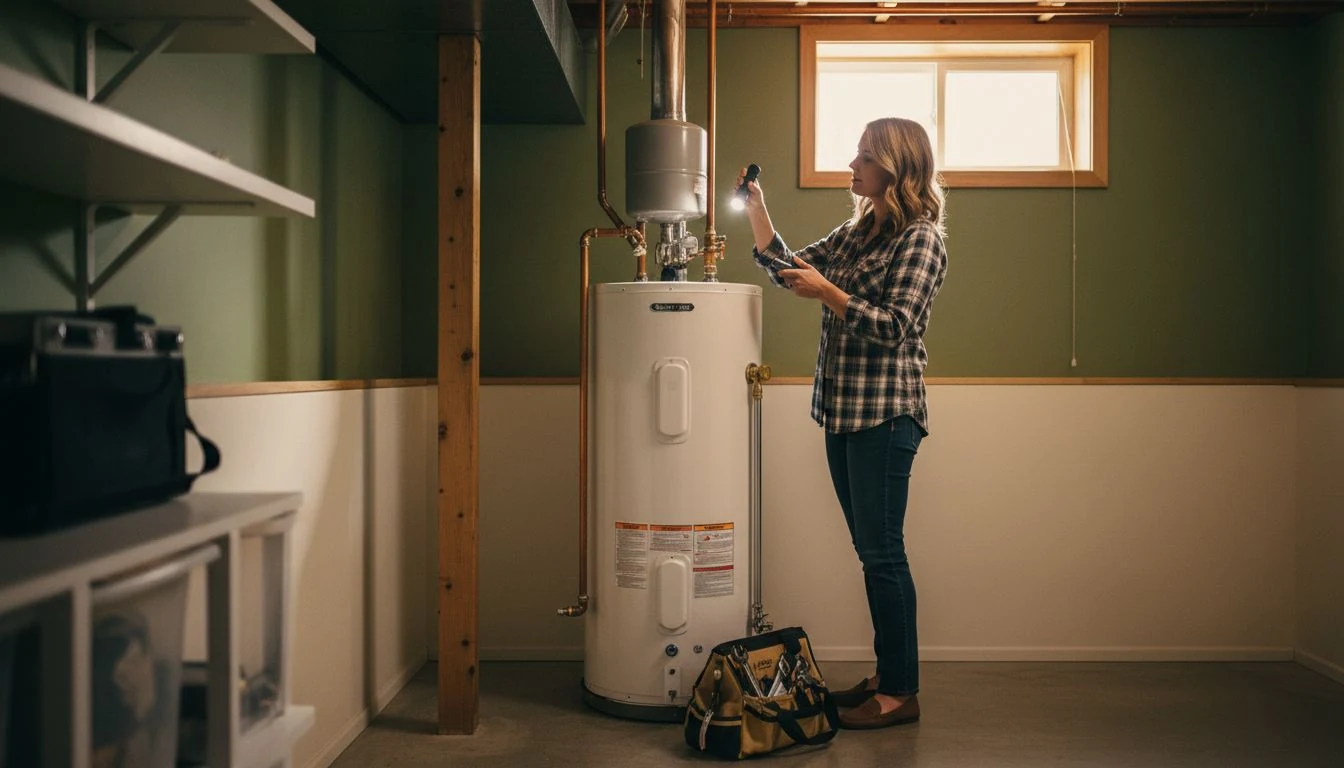
My water heater died on a Sunday. Not a slow, warning-you kind of death either. I stepped into the shower, got about four seconds of warm before it went ice cold, and then found a slow puddle creeping across the basement floor toward a cardboard box of holiday decorations. The first plumber I called quoted me $3,400 over the phone, sight unseen, and told me he could be there in an hour. That number felt wrong in my gut, so I made myself wait, made three more calls, and ended up paying $1,650 for a better unit two days later. That gap is exactly why I pulled the whole water heater replacement cost apart.
Here is the short version before the tables. The water heater replacement cost in 2026 runs about $900 to $3,500 for a standard tank swap, materials and labor together, with the national middle landing near $1,200 to $1,800. Go tankless or switch fuel types and you can push past $5,500. The tank itself is rarely what breaks the bank. What actually moves your water heater replacement cost is the type you pick, whether a plumber has to touch your gas line or venting, how buried the old unit is, and which code upgrades your last installer quietly skipped.
How much does a water heater replacement cost in 2026?
As of mid-2026, replacing a standard tank water heater runs roughly $900 to $3,500 installed, with most homeowners landing around $1,400. The fastest way to sanity-check any quote is to stop staring at the total and split it into two buckets: the unit, and everything the plumber does to it. A 50-gallon tank at the store might be $700, but the install, the permit, and any code catch-up are where quotes spread wide. Here is the range by tier.
| Tier | What you get | 2026 installed cost |
|---|---|---|
| Budget | Standard 40-gallon electric or gas tank, like-for-like swap, easy access, no code surprises | $900 to $1,800 |
| Mid-range (most jobs) | 50-gallon tank or hybrid heat-pump unit, permit pulled, minor code upgrades, expansion tank | $1,800 to $3,500 |
| Premium | Gas tankless with new venting and gas line, or a full fuel switch, tight access | $3,500 to $6,500+ |
Those are estimates, and they move with your region and your home. Labor alone runs $250 to $600 in most of the country for a straightforward tank swap, and a lot more if the old heater is wedged into a crawlspace or a second-floor closet. My $1,650 job was mid-budget: a 50-gallon gas tank, a new expansion tank my old setup was missing, and a permit the previous owner had clearly never bothered with.
Water heater replacement cost by type
The single biggest lever on your water heater replacement cost is the type of heater, not the brand. Here is how the four common options actually compare in 2026, including how long each one tends to last, because a cheaper unit that dies in eight years is not really cheaper.
| Type | 2026 installed cost | Typical lifespan | Worth knowing |
|---|---|---|---|
| Electric tank (40 to 50 gal) | $900 to $2,200 | 10 to 15 years | Cheapest to install, but usually the priciest to run month to month |
| Gas tank (40 to 50 gal) | $1,200 to $2,800 | 8 to 12 years | Cheaper energy bills, needs proper venting, most common swap |
| Hybrid heat-pump | $1,800 to $4,500 | 13 to 15 years | Big efficiency win, needs floor space, warm air, and a drain |
| Gas tankless | $2,500 to $5,500 | 20+ years | Endless hot water and a small footprint, high upfront cost |
I almost bought the cheapest electric tank on the shelf to save $300 up front. My brother-in-law, who actually does this for a living, talked me out of it in about ninety seconds. On my utility rates the electric unit would have cost me more in running it within three years than I saved buying it. That is the trap with any hot water heater replacement cost comparison that only looks at the sticker.
What drives your water heater replacement cost up
Two houses on the same street can get water heater quotes $1,500 apart, and it usually is not the plumber gouging one of them. It is the house. A few things reliably push a quote higher, and knowing them means you will not flinch at a fair number or nod along to a padded one.
Size and capacity matter first. Jumping from a 40-gallon to a 75-gallon tank, or oversizing a tankless to feed a big family, adds real money. Fuel type is next, and it is the big one. If a plumber has to run a new gas line or rebuild venting, that alone can add $500 to $2,000. Location is quietly brutal too. A heater sitting in an open basement corner is a two-hour job; the same heater crammed into an attic or a finished closet can take a full day. And then there is code. If your home was built before certain expansion tanks, seismic strapping, or drip pans were required, a permitted install means bringing all of that current, which is safer but not free. For a broader sense of how these system costs stack against a whole project, my breakdown of 2026 home renovation costs puts it in context.
Can you DIY a water heater replacement, or should you hire out?
I am the first person to tell you to do it yourself when you actually can. This is one of the times I would not. A tank water heater is doable for a genuinely experienced DIYer with an electric unit and simple connections, and swapping one could save you the $250 to $600 in labor. But the honest math rarely favors it once you count the risks.
Gas heaters involve a live gas line and combustion venting, and a mistake there is a carbon monoxide risk, not a leaky-faucet inconvenience. Most areas legally require a permit and an inspection for a water heater, and many require a licensed plumber to pull it. Botch the temperature and pressure relief valve or the venting and you can void the warranty or, worse, create a genuine hazard. The U.S. Department of Energy’s checklist for installing a gas tank water heater is a solid, non-salesy read on sizing and efficiency before you decide. My rule is simple: if it is electric, accessible, and you have real plumbing confidence, maybe. If it is gas or tankless, hire a pro and sleep fine. And if you are trying to figure out whether the quote you got is even reasonable, my guide on telling if a contractor quote is fair walks through the exact red flags.
Tank vs. tankless: is the upgrade worth the cost?
Everybody wants me to tell them tankless is worth it because it sounds like the smart-money choice. Sometimes it is. Often it is not, at least not for the reason people think. A gas tankless unit runs $2,500 to $5,500 installed, roughly double a standard tank, mostly because of the venting and gas line work, not the unit.
What you get for that premium is endless hot water, a unit that lasts 20-plus years instead of 10 to 12, and a reclaimed corner of your basement. What you do not automatically get is a fast payback. The energy savings are real but modest for an average household, often $80 to $150 a year, which means the upfront premium can take a decade or more to earn back. My honest take: go tankless if you are staying in the home long-term, hate running out of hot water, or want the space. If you just need working hot water tomorrow at the lowest cost, a good tank is not the lesser choice, it is the sane one. The same logic shows up in bigger mechanical jobs, which is why I broke down 2026 AC repair and replacement costs the same way.
The line items hiding inside a water heater quote
Here is the part almost no quote itemizes for you, and the part that explains why two bids for the same job can look nothing alike. When a plumber hands you one lump sum, this is what is usually inside it. Ask for it broken out and you can instantly spot padding, or spot the honest plumber who is not skipping the code work.
| Line item | Typical 2026 cost |
|---|---|
| Water heater unit (50-gallon) | $600 to $1,300 |
| Labor and installation | $250 to $600 |
| Permit and inspection | $50 to $500 |
| New expansion tank | $40 to $350 |
| Venting or gas line adjustments | $0 to $1,000 |
| Drip pan and code discharge line | $20 to $150 |
| Haul-away of the old unit | $25 to $100 |
What blows the water heater budget
- Switching fuel or format. Going electric-to-gas, or tank-to-tankless, means new gas lines and venting that can add $1,000 to $3,000 on top of the unit. Decide the type before you call, not after.
- Emergency same-day service. The Sunday-night, water-on-the-floor call carries an after-hours premium of a few hundred dollars. If you can catch a heater that is leaking a little before it fails hard, you buy yourself time to shop.
- Bringing a skipped install up to code. If the last person never pulled a permit, your legal install now has to add the expansion tank, pan, and strapping they left out. It is safer, but it is a line item you did not create.
How to save on a water heater replacement without cutting corners
You do not lower a water heater replacement cost by buying the flimsiest heater on the shelf. You lower it by being an organized buyer. Get at least three quotes, and hand each plumber the identical scope so you are comparing the same job. Ask every one of them to itemize, especially the permit and any code work, because the honest breakdown is where you catch both padding and dangerous shortcuts.
Buy before you are desperate if you possibly can. A heater that is ten years old and starting to rust at the base is telling you to shop now, on a weekday, not at midnight when it floods. Consider a hybrid heat-pump model if you have the space and a nearby drain, since federal efficiency programs and many utilities offer real rebates on them; ENERGY STAR keeps a current list of qualified water heaters and available incentives that can knock hundreds off the net cost. And if your basement work is turning into a bigger plumbing project, my bathroom remodel cost guide covers how to bundle the labor smartly instead of paying twice.
Grab my free Project Cost Estimator. Before you call a single plumber, plug your tank size and fuel type into my printable estimator so you walk into every water heater quote already knowing your own fair range. It is the same one-page sheet I used to talk my way down from that $3,400 phone quote.
A bigger shower head and a longer shower change your hot water math, so if you are mid-project look at what a tub to shower conversion runs in 2026.
One mix-up I hear a lot: a heating boiler that feeds radiators is not a water heater, even if someone calls the tank a boiler. If yours heats the house, this boiler replacement cost guide.
Before you price a new tank, check whether the old one only needs a cleanout. Sediment makes a tank pop and run out of hot water early, and you can clear it with a water heater flush on a Saturday afternoon.
Frequently Asked Questions
How much does it cost to replace a 50-gallon water heater?
In 2026, a standard 50-gallon tank replacement runs roughly $1,200 to $2,800 installed for gas and $900 to $2,200 for electric, materials and labor together. The spread comes down to fuel type, whether venting or a gas line needs work, and any code upgrades your permit requires. Get three itemized quotes to find your real number.
Is it worth replacing a water heater myself?
For an experienced DIYer with an accessible electric tank, doing it yourself can save $250 to $600 in labor. But most homes need a permit and inspection, and gas or tankless units involve live gas lines and venting that make professional installation the safer, and often legally required, choice. When in doubt, hire it out.
How long does a water heater last before it needs replacing?
A standard tank water heater lasts about 8 to 12 years, electric units often a bit longer than gas. Tankless units can run 20 years or more. If yours is past ten years, rusting at the base, or losing hot water capacity, start shopping on your own schedule rather than waiting for it to fail and forcing an emergency-rate call.
All prices here are 2026 estimates and vary by region, home condition, and contractor. Tessa is a hands-on homeowner, not a licensed plumber; use these ranges to ask smarter questions and always confirm figures with local pros.
Free DIY Project Cost Estimator
The spreadsheet I use to price out a project before I start, so a weekend job never blows the budget. Join the newsletter and I’ll send it over.
No spam, ever. Unsubscribe anytime. — Tessa
Keep reading — more on Plumbing Costs
Water Softener Installation Cost: My $5,900 Quote vs. the $1,874 I Paid
The salesman set a clear glass of my tap water on the kitchen table, squeezed in…
Read article →
Garbage Disposal Replacement: The Job, the Cost, and When to Call
I found it with my sock. I stepped into the cabinet under the kitchen sink to…
Read article →
Septic Servicing Cost in 2026: What Pumping and Inspection Run Before the Ground Freezes
The man who sold us this house left exactly one useful thing behind: a napkin in…
Read article →